
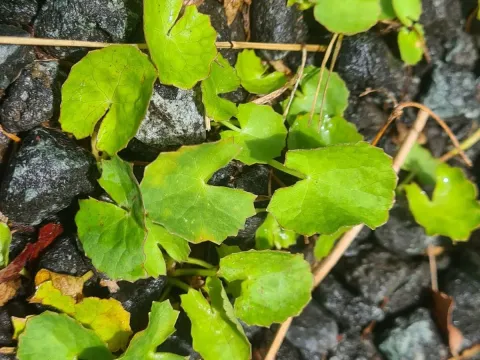
Centella asiatica
Centella L.
Centella asiatica is a tropical perennial plant typically propagated through vegetative means, such as division or layering of stolons. When propagating from seeds, a pre-treatment or stratification process is often required to ensure uniform germination.
What the section contains

Centella asiatica
The ideal time for transplanting into open fields is when soil temperatures are consistently above 20 degrees Celsius. As the plant is highly frost-sensitive, all risk of low-temperature damage must be eliminated before planting begins.
For seed propagation, sowing should take place in a well-draining, moist medium. Maintaining a constant temperature between 22 and 25 degrees Celsius is crucial, as the seeds have a relatively slow and irregular germination rate.
Commercial growers prefer vegetative propagation, as it allows for the rapid establishment of a uniform crop. Cuttings are planted at intervals of 25–30 cm, providing immediate irrigation to ensure successful rooting in the new environment.
During the establishment phase, it is vital to keep the soil surface moist without creating saturated conditions, as excessive standing water can lead to root decay in newly planted individuals.
Centella asiatica, a member of the Apiaceae family, thrives in warm, humid climates. It prefers fertile, loose soil rich in organic matter, with a pH balance ranging from 5.5 to 7.0 for optimal nutrient absorption.
The plant performs best in partial shade. While it requires light for photosynthesis, direct midday sunlight can stress the plant, causing leaf scorch and reducing the concentration of active medicinal compounds.
A stable temperature range of 20 to 30 degrees Celsius is necessary for vigorous growth. If temperatures drop below 15 degrees Celsius, the metabolic processes slow down significantly, leading to dormancy or stunted development.
Consistent moisture is the most important requirement for this crop. In its native habitat, it grows along riverbanks and in damp areas, so irrigation systems must be capable of providing frequent, deep watering to prevent the soil from drying out.
Nutrient management focuses on organic inputs. Excessive chemical nitrogen should be avoided, as it promotes rapid leaf growth at the expense of secondary metabolites, which are essential for the herb's medicinal value.
The yield of Centella asiatica is measured by the total weight of harvested biomass, which includes leaves and stems. Under controlled conditions, multiple harvests are possible within a single growing season.
By implementing proper irrigation and partial shading, growers can produce between 1.5 to 3 kilograms of fresh biomass per square meter per harvest. High-tech greenhouse systems can further increase this yield significantly.
Regular harvesting encourages the plant to spread and produce new vegetative growth. Typically, the harvest involves cutting the stems 3–5 cm above the ground to ensure the crown remains intact for rapid regeneration.
Productivity is highly correlated with the health of the root system and the availability of moisture. Efficient management of these factors allows for a continuous supply of biomass to meet pharmaceutical market demands.
Monitoring the plant's growth rate is essential. When the foliage becomes dense and starts to shade the lower layers of the plant, it serves as a sign that the crop is ready for harvesting to maintain high phytochemical concentrations.
Common issues affecting Centella asiatica include fungal infections like powdery mildew and root rot. These problems are generally exacerbated by poor drainage and high humidity combined with limited air circulation in the planting area.
Pests such as spider mites and aphids are frequently observed, especially in warm, dry environments. These insects can cause leaf deformity and significant yield losses if left uncontrolled.
Integrated Pest Management (IPM) is recommended to control threats. Biological agents or natural soaps are preferred over heavy chemical pesticides, as the crop is destined for therapeutic use, where chemical residues must be avoided.
Prevention is key; maintaining proper row spacing ensures sufficient airflow, which significantly reduces the likelihood of fungal outbreaks. Regularly clearing debris from around the plants also helps in minimizing habitat for pests.
Early detection is vital for disease control. Growers should inspect the underside of leaves for signs of pests or spores and intervene promptly with targeted, environmentally safe treatments to protect the integrity of the crop.
Harvesting is usually performed manually or with specialized harvesting equipment. It is important to perform clean cuts that promote regrowth rather than damaging the plant's base or the developing stolons.
Post-harvest handling is critical, as the fresh biomass is highly perishable and begins to ferment quickly if not managed. Processing must occur within hours to preserve the active triterpene compounds.
Drying is typically conducted at temperatures below 45 degrees Celsius. Exceeding this temperature range can lead to the breakdown of vital medicinal properties, rendering the final product less effective for pharmaceutical use.
Once dried to a moisture content of approximately 10–12%, the material should be stored in airtight containers in a cool, dark environment to prevent degradation and moisture accumulation.
Standardized storage protocols ensure that the pharmacological potential of Centella asiatica is maintained for up to two years, ensuring consistent quality for global supply chains.