
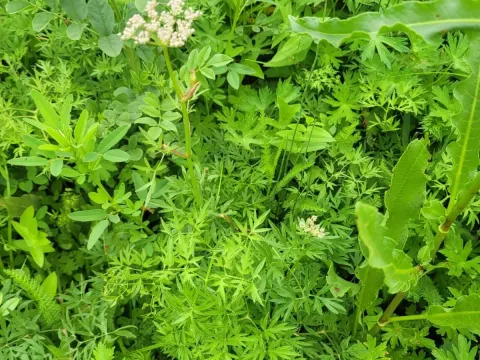
Cenolophium
Cenolophium
Sowing of Cenolophium denudatum is recommended in early spring, as soon as the soil is physically ready for cultivation. The seeds of this crop are known for their dormancy, so sufficient soil moisture is required to obtain uniform germination.
What the section contains

Cenolophium
Late autumn (winter) sowing is also possible, allowing seeds to undergo natural stratification during the winter period. This facilitates earlier germination in the spring and better root system development in the first year of life.
The seeding rate depends on the seed fraction and the condition of the seedbed, usually ranging from 8 to 10 kg per hectare with row seeding methods. The seeding depth should not exceed 1–2 centimeters, as small seeds require firm contact with moist soil.
In the first year, Cenolophium grows slowly, forming mainly a rosette of basal leaves. It is important to keep the fields free of weeds during this period, as the crop struggles to compete with fast-growing weed grasses.
When establishing commercial plantations, it is recommended to use high-quality seed material with high germination energy. Soil preparation should include deep plowing and thorough surface leveling to prevent water logging.
Cenolophium belongs to the Apiaceae family and is a perennial herbaceous plant. In nature, it tends to grow in meadow communities, preferring areas with moderate but constant humidity.
The crop is quite demanding in terms of soil fertility; it develops best on loamy and sandy chernozem soils. It does not tolerate acidic substrates well, so liming is required on acidic soils before planting.
The plant possesses high frost resistance and can withstand severe winters in temperate climate zones without significant damage to the growth point. However, it is sensitive to prolonged summer drought periods that reduce vegetative mass.
The optimal light level for Cenolophium is open space, but the crop shows some shade tolerance during early growth stages. In conditions of excessive moisture, the plant may be affected by rot, so drainage plays an important role.
In agronomy, it is important to follow crop rotation, placing Cenolophium after cereals or row crops. This helps to reduce the infectious background and improve the phytosanitary condition of the field before sowing the perennial.
The yield of Cenolophium as a forage crop depends on the management regime and moisture availability during the intense regrowth period. In favorable years, the crop is capable of producing two full mows of green mass per season.
Maximum productivity indicators are reached in the second and third year of life when the plant's root system is fully formed. During this period, dry matter can reach up to 4–6 tons per hectare with proper management.
To increase yield, it is recommended to apply moderate doses of nitrogen fertilizers after each mowing. This stimulates active tillering and rapid regrowth of the leaf apparatus, which is critical for obtaining high-quality hay or silage.
The high protein and vitamin content in the green mass makes Cenolophium a valuable component of grass mixtures. It retains its nutritional value even when mowed late, providing agronomists with flexibility in harvest timing.
When grown for seeds, the yield of seed material can vary from 300 to 600 kg per hectare. It is important to avoid over-ripening of the umbels to prevent seed shedding, which significantly reduces the total harvest.
Typical pests for representatives of the Apiaceae family are the carrot fly and aphids, which can damage young plants. Regular monitoring of the fields allows for the timely application of insecticides when damage thresholds are exceeded.
Among fungal diseases, the greatest threat is posed by powdery mildew and various types of leaf spots that develop in conditions of high air humidity. Preventive measures include thinning the crops and maintaining proper irrigation regimes.
Root rot can affect Cenolophium in conditions of water stagnation or heavy soil mechanical composition. For prevention, it is necessary to ensure good aeration of the root layer and avoid soil compaction in the plots.
Pests that damage inflorescences can negatively impact seed productivity. These include the umbel moth and certain types of weevils that feed on buds during their formation phase.
Control of diseases and pests should be based on an integrated plant protection system. Preference should be given to agrotechnical methods, leaving chemical treatments as a last resort in cases of severe infestation.
Harvesting Cenolophium for green mass is carried out in the early flowering phase when the plant contains the maximum amount of nutrients. An early cut ensures the production of the highest quality forage with high digestibility.
When making hay, it is important to ensure quick wilting of the mass in swaths to prevent leaf loss and the leaching of nutrients by precipitation. The use of modern mower-conditioners helps to accelerate this process.
The collection of seed material is carried out using a two-stage method because the seeds ripen unevenly. First, swathing is performed to allow for post-ripening, followed by threshing with combine harvesters.
It is important to thoroughly clean and dry the seeds after harvest to prevent self-heating and mold development during storage. The moisture content of the seed batch upon storage should not exceed 12–13 percent.
Harvest residues left in the field are plowed into the soil as organic fertilizer. This contributes to enriching the soil with organic matter and improves its physical and chemical properties for subsequent crops in the rotation.