
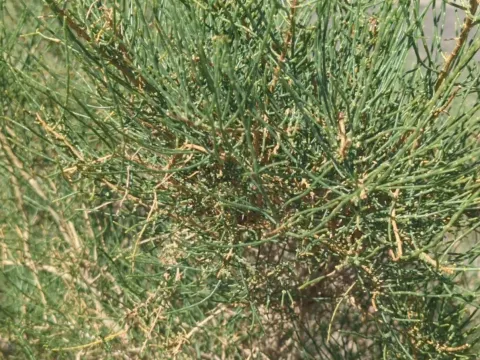
Saxaul
Haloxylon Bunge
Saxaul (Haloxylon) belongs to the Amaranthaceae family. The propagation of this culture is conducted primarily through seeds, which possess a short lifespan regarding viability; therefore, sowing is performed shortly after harvesting.
What the section contains
Saxaul
The optimal sowing period occurs in late autumn or early winter. It is crucial for seeds to be placed in the soil before the onset of extreme cold, ensuring they remain dormant until the spring rise in temperature and moisture levels.
Sowing methods range from manual labor to aerial seeding, particularly when implementing large-scale reforestation in sandy desert regions. Seeds do not require deep burial; a light covering of sand is sufficient to provide the necessary contact for germination.
In natural conditions, germination coincides with the first spring rains. In agricultural practices, it is essential to manage seed density to prevent excessive competition for limited water resources among young seedlings.
The first year of growth is vital, as the plant focuses on developing a deep, robust root system. This adaptation is critical for long-term survival in the harsh, arid environments where Saxaul is grown.
Saxaul is an obligate xerophyte, uniquely adapted to the rigorous conditions of arid zones. It is highly photophilous and cannot tolerate shading, necessitating proper spacing between plants in agricultural or forestry settings.
The plant thrives in various soil types, ranging from loose sands to highly saline soils. Its remarkable salt tolerance makes Saxaul a vital tool for the biological reclamation of degraded and salinized landscapes.
The temperature range for Saxaul is extreme, encompassing scorching summer heat exceeding +45°C and severe winter frosts. This tolerance is enabled by the plant's unique cellular biochemistry and dormancy mechanisms.
Water requirements for Saxaul are minimal. The plant is efficient at extracting moisture from deep soil horizons, which makes it an excellent choice for stabilizing shifting sands and preventing erosion.
Effective agrotechnical care involves protecting young plantations from wildlife grazing. Overgrazing remains one of the primary anthropogenic threats that can jeopardize the establishment of new Saxaul forests.
The economic value of Saxaul is measured not in traditional crop yields but in phytomass accumulation and its contribution to environmental stability. It serves as a natural barrier against desertification.
In sandy deserts, the annual growth of biomass is relatively modest. However, when managed properly, plantations effectively form dense forests that significantly mitigate wind erosion and improve the surrounding microclimate.
Saxaul wood is exceptionally dense, heavy, and hard. It has historically served as a high-quality fuel source, often surpassing many deciduous species in calorific value, making it a critical resource for local desert populations.
Beyond wood, the aerial parts of the plant provide essential fodder for camels and small ruminants during the winter season, filling a critical gap in food resources in arid territories.
Saxaul also enhances soil structure by contributing organic matter, which facilitates the gradual improvement of soil fertility in otherwise barren areas.
Common pests include various species of weevils and leaf beetles that can cause damage to the photosynthetic shoots. While these rarely cause total crop failure, they can weaken individual plants.
Parasitic plants, such as Cistanche, pose a significant biological threat as they develop on the root system of the Saxaul tree, potentially reducing its vitality if the infection intensity is high.
Environmental stressors, particularly prolonged droughts spanning several years without significant rainfall, present a major risk, as even well-adapted trees may struggle to survive extreme water scarcity.
Anthropogenic pressure, specifically illegal logging for fuel, remains the greatest threat to the survival of natural Saxaul forests, often leading to rapid degradation of grazing lands and loss of soil protection.
Fungal diseases like powdery mildew may occur in periods of high humidity; however, the naturally dry air of desert environments generally prevents the development of widespread epidemics.
Harvesting Saxaul for industrial or fuel use is generally performed via selective thinning, which preserves the root system and allows for natural vegetative regeneration of the plantation.
Seed harvesting is conducted in autumn when the fruits turn brown. It is vital to perform the harvest during dry weather to prevent the deterioration of the seeds during subsequent storage.
Mechanical harvesting techniques have been developed to shake the shrubs and collect seeds, followed by a cleaning process to remove sand and debris, increasing efficiency in reforestation projects.
Plantation management includes regular monitoring for pests and diseases, alongside the removal of invasive weeds that might compete with the developing young trees in their first years.
Given the ecological significance of Saxaul in curbing desert expansion, all harvesting activities must be strictly regulated to ensure the long-term sustainability of the desert ecosystem.