
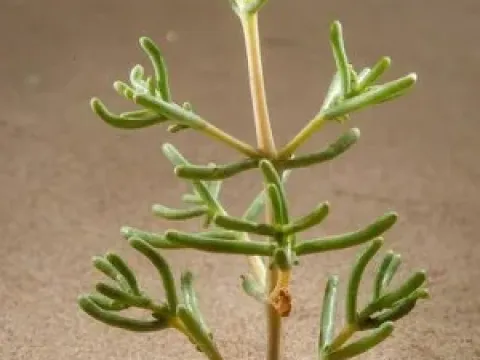
Seidlitzia
Seidlitzia
Seidlitzia seeds are sown in early spring as soon as the soil warms up to ensure optimal germination. Early planting is crucial to leverage residual soil moisture for initial seedling development.
What the section contains


Seidlitzia
The seeding depth should be kept shallow, typically 1 to 2 centimeters, as the small seeds have limited energy reserves to penetrate deep soil layers.
Before sowing, it is recommended to conduct seed stratification in a cool and moist environment to improve the uniformity of plant emergence in the field.
Row spacing is usually set between 60 and 70 centimeters to facilitate mechanical maintenance and ensure each plant has sufficient access to light and nutrients.
Using precision seed drills is highly advisable for commercial production to achieve the correct plant density and minimize the need for manual thinning later in the season.
Seidlitzia belongs to the Amaranthaceae family and is recognized as a halophyte, perfectly adapted to thrive in highly saline soils where standard crops would perish.
The plant requires high levels of solar irradiance and performs optimally in arid, desert-like climates with minimal humidity and high summer temperatures.
Soil requirements focus on aeration rather than texture, as the plant can grow in sandy or clayey solonchak soils provided they are rich in sodium salts.
It demonstrates remarkable resilience to osmotic stress, allowing it to maintain metabolic activity under conditions that inhibit most other botanical species.
Agricultural management should focus on maintaining soil salinity levels that support the plant's growth while suppressing sensitive weed species that might compete for resources.
The yield of Seidlitzia is primarily measured by the total accumulation of dry biomass, which serves as a raw material for various industrial applications.
While the plant is drought-tolerant, adequate moisture during the early vegetative stages significantly boosts the total final biomass production per hectare.
The harvesting phase begins when the plant reaches physiological maturity, ensuring that the concentration of desired mineral compounds in the tissues is maximized.
Typical yields vary depending on soil salinity and the annual weather cycle, with well-managed plantations producing several tons of dry mass per hectare.
Systematic monitoring of the growth stages allows for the optimization of harvest timing, which is vital for maintaining the quality and chemical purity of the yield.
The main pests affecting Seidlitzia include locusts and other orthopterans, which can rapidly defoliate crops if not monitored during peak insect activity periods.
Fungal diseases are generally limited but may occur during periods of uncharacteristic humidity, often affecting the root collar if water stagnation persists.
Prevention strategies involve proper field drainage and avoiding unnecessary irrigation that could create favorable conditions for pathogenic fungal development.
Root-knot nematodes may present a localized threat, particularly in light sandy soils, potentially reducing the overall vigor of the crop if left unchecked.
Routine field inspections and integrated pest management practices are essential to mitigate potential damage and ensure the longevity of the plant population.
Harvesting is performed using mechanical harvesters that combine cutting and shredding processes, preparing the plant material for immediate industrial transport.
Choosing a day with low humidity is ideal for the harvest, as it facilitates natural dehydration of the stalks and leaves before the material enters storage.
Post-harvest, the biomass should be dried in well-ventilated areas to prevent the degradation of chemical constituents and to inhibit potential mold growth.
Cleaning the harvested material to remove soil particles is a vital step, as it significantly improves the grade and processability of the harvested biomass.
The entire logistics process must be streamlined to move the crop from the field to storage or processing facilities before any secondary moisture uptake occurs.