
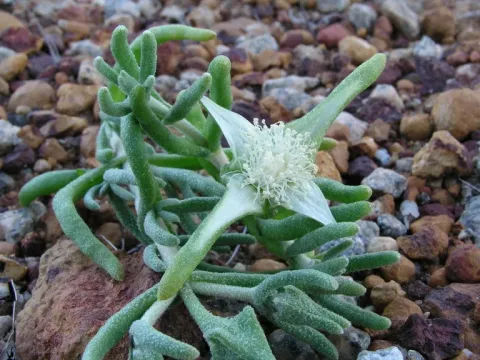
Sclerolaena
Sclerolaena
Sclerolaena is a genus of plants belonging to the Amaranthaceae family, native primarily to the arid and semi-arid regions of Australia, where it serves as a vital component of the local ecosystem.
What the section contains


Sclerolaena
These plants are recognized as specialized halophytes, capable of thriving in highly saline and alkaline soils that would be toxic to most conventional agricultural crops.
Botanically, they are characterized by their woody base and distinctive, often spiny, perianths that protect the fruit and aid in seed dispersal by adhering to animal fur.
Sclerolaena requires full sunlight exposure and thrives in climates with high thermal amplitude, where it demonstrates exceptional physiological resilience to heat.
The root system is exceptionally deep and efficient, allowing the plant to reach moisture reserves deep within the soil profile, ensuring survival throughout prolonged dry spells.
In terms of agricultural utility, Sclerolaena species are highly valued as resilient fodder plants for livestock, particularly in regions where rainfall is too low for traditional grasses.
The biomass of these plants remains relatively palatable and nutritious even under moisture stress, providing essential proteins and minerals when other forage sources dry up.
Sustainable rangeland management involves careful grazing rotation to ensure that Sclerolaena populations can set seed, maintaining the long-term productivity of the land.
The plants are instrumental in soil stabilization, as their root systems help consolidate fragile, wind-blown soils, preventing severe desertification processes.
- High mineral content for livestock.
- Natural erosion control properties.
- Adaptability to poor soil structures.
Root rot caused by fungal pathogens such as Phytophthora or Fusarium is a significant threat, usually occurring after rare but heavy flooding events that saturate the dry soils.
Locust swarms pose a periodic but severe threat to the aerial parts of the plant, often leading to rapid defoliation and loss of valuable grazing resources.
Insect pests that target seeds can impede the natural regeneration cycle, which is vital for the population density of the species in remote pastoral areas.
Invasive weed species often outcompete Sclerolaena in disturbed landscapes, significantly reducing the biodiversity and the quality of natural pastures.
Overgrazing remains the most critical anthropogenic threat, as it prevents the plants from reaching reproductive maturity and depletes the seed bank in the soil.