
Amarcrinum
Amarcrinum
Description
Sowing dates
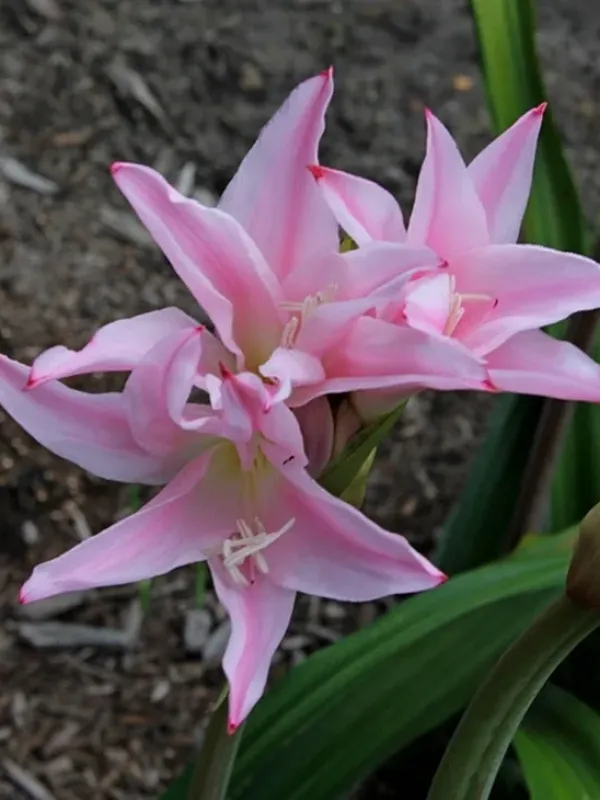
Amarcrinum is an intergeneric hybrid resulting from a cross between Amaryllis belladonna and Crinum moorei, known for its elegant, trumpet-shaped flowers.
The propagation of this crop is primarily done through the separation of offsets, which are small bulbs formed around the mature mother bulb during the growing season.
Planting should occur in spring after the danger of frost has passed, ensuring the soil has warmed up sufficiently to stimulate root development.
It is important to plant the bulbs at a depth where the neck remains exposed at or just above the soil level to prevent fungal issues related to moisture buildup.
Proper spacing is essential for healthy plant development, and it is recommended to place bulbs at least 30 centimeters apart to allow for future bulb multiplication.
Growing requirements
As a member of the Amaryllidaceae family, the Amarcrinum thrives in sunny locations, requiring at least six hours of direct sunlight to bloom effectively.
The plant demands well-drained, fertile soil, ideally a sandy loam rich in organic matter that prevents water stagnation around the bulb's basal plate.
Watering practices should be consistent during the growth phase, but the soil must be allowed to dry slightly between watering sessions to avoid root rot.
These plants are not fully hardy, necessitating protection during winter in colder zones or, in severe climates, moving the bulbs indoors for the winter period.
Providing a balanced fertilizer high in potash throughout the peak summer months supports the formation of robust flower spikes and strengthens the bulbs.
Main diseases and pests
Common pests that can infest Amarcrinum include spider mites and aphids, which typically congregate on the undersides of leaves, causing stunted growth.
Fungal pathogens such as Stagonospora curtisii (red blotch) are prevalent when conditions are overly damp, leading to unsightly lesions on foliage and stems.
Bulb rot remains a significant threat if drainage is inadequate, often caused by pathogenic soil fungi that proliferate in saturated, heavy clay environments.
Integrated pest management, including regular inspection and the use of targeted horticultural oils, is recommended to keep pest populations under control.
Sterilizing garden tools between uses and removing any decaying plant matter prevents the transmission of soil-borne diseases within the bulb planting beds.