


Reference · Crops
Saltwort
Salsola
Sowing of Salsola is typically performed in the spring season when soil temperatures reach 10–12°C, ensuring optimal conditions for seed germination.
4
items
What the section contains
Marketplace
Products in this section · 3

Saltwort
In arid regions, dormant winter sowing is an alternative method, utilizing moisture from melting snow to support early development of the seedlings.
The seeds should be planted at a shallow depth of 1–2 centimeters, which allows for consistent contact with moisture while avoiding excessive burial in the soil profile.
The seeding rate ranges between 4 and 6 kilograms per hectare, depending on the specific method of sowing and the intended density of the future pasture.
Post-sowing practices include light rolling of the field to improve soil-to-seed contact, which significantly helps in preventing moisture loss in the topsoil layer.
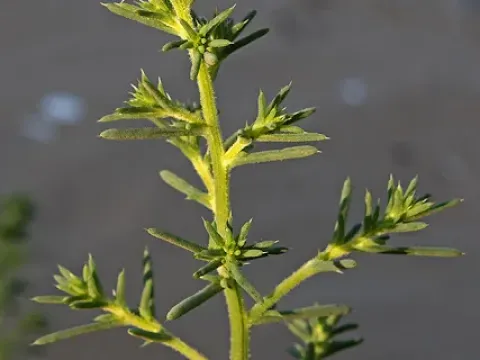
Saltwort belongs to the Amaranthaceae family and is recognized as a highly adapted halophyte capable of thriving in soils with high salt concentrations.
The crop is extremely resistant to drought and heat, making it an ideal candidate for phytoremediation and land rehabilitation in desert or semi-desert environments.
While Salsola shows a preference for sandy or light-textured soils, its biological resilience allows it to adapt to diverse saline environments where other crops fail.
Sufficient solar irradiation is a critical requirement for development, meaning the plant should be grown in open areas without competition from taller vegetation.
Waterlogging and high water tables must be avoided as they pose a severe threat to the root system of Salsola, often leading to rapid plant decay.
The yield of green biomass depends heavily on rainfall and soil salinity levels, usually ranging from 5 to 15 centners per hectare in standard conditions.
Under managed conditions with minimal supplemental irrigation or soil care, the productivity of the crop can be improved, reaching significantly higher levels.
Salsola maintains high nutritional quality even during the fruit-bearing phase, serving as a vital forage source for livestock such as camels, sheep, and goats.
Harvesting of seeds is conducted when the plants reach full maturity, indicated by the change in color and the drying of the stems.
Maintaining an even plant population is essential for maximizing yields and ensuring the longevity of the pasture in extensive agricultural systems.
The primary pathological threats to Salsola include fungal infections such as powdery mildew and various rust diseases, triggered by high humidity levels.
Pests like weevils can cause significant damage to young shoots and reproductive parts, potentially leading to substantial reductions in harvestable biomass.
Integrated pest management strategies are prioritized to mitigate damage, focusing on ecological balance and crop rotation to reduce pest pressure.
Overgrazing represents a major risk to the sustainability of Salsola pastures, as it can exhaust the plants and prevent necessary regrowth cycles.
Weed management remains important during the early stages of growth, requiring light inter-row cultivation to ensure the young plants are not outcompeted.
Harvesting for forage purposes is best carried out during the flowering phase to ensure the plant contains the highest concentration of proteins and minerals.
Mechanical harvesting should be done with appropriate equipment, ensuring the cut height is managed to protect the root system for potential regeneration.
Proper drying is essential due to the succulent nature of the plant tissues, which require a controlled environment to avoid mold development during storage.
Seed collection is performed during dry weather to minimize losses, as the mature seeds detach easily from the plants once they reach full ripeness.
Storage facilities for the harvested product must be clean and well-ventilated to prevent humidity-induced spoilage of the plant biomass or seeds.