
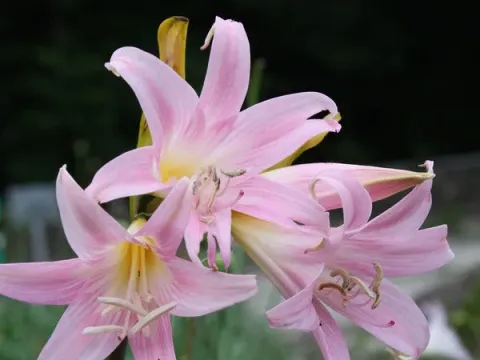
Amarygia
Amarygia
Amarygia is an intergeneric hybrid resulting from the crossing of Amaryllis and Crinum genera. As a hybrid, it does not reproduce true to type from seeds, making vegetative propagation the primary method for maintaining its desired horticultural characteristics.
What the section contains
Amarygia
Propagation is achieved by separating offsets (daughter bulbs) from the parent bulb during the dormant phase. This process requires careful handling to avoid damaging the root system and the neck of the bulb, which is sensitive to mechanical injuries.
The bulbs should be planted in a well-draining, nutrient-rich substrate. Ensuring that the neck of the bulb remains at or slightly above the soil line is crucial for preventing bulb rot and promoting healthy leaf development during the growing season.
Timing is essential when planting Amarygia; it is best performed just as the plant emerges from its dormancy period. Proper spacing is required to ensure adequate airflow between plants, which is a key factor in disease prevention.
Once planted, moderate watering should be initiated to encourage root establishment. As the plant begins to grow, it requires a stable environment to develop its complex root system, which supports the later development of its large inflorescences.
As a member of the Amaryllidaceae family, Amarygia thrives in locations with bright, indirect light. Direct sunlight can be beneficial, but intense afternoon sun should be avoided to prevent foliage scorch, especially in hot climates.
The growing medium must be porous and well-aerated, typically composed of a blend of peat, perlite, and coarse sand. A neutral soil pH is ideal, as it facilitates the efficient uptake of nutrients necessary for vigorous bulb growth and flowering.
Temperature management is a critical aspect of Amarygia cultivation, as the plant is not frost-tolerant. It performs best in temperatures between 20°C and 25°C during the active growing season, requiring a cooler period during dormancy to trigger flowering.
Watering must be carefully managed; the soil should be allowed to dry out slightly between waterings to prevent root suffocation. Overwatering is the most common cause of failure in cultivating this genus, leading to rapid decay of the basal plate.
Nutritional requirements are met by applying balanced liquid fertilizers during the active growth stage. High-potassium fertilizers are recommended as the flowering period approaches to support the development of sturdy flower stalks and large blooms.
Stagonospora curtisii, commonly known as red blotch or red fire, is the primary fungal pathogen affecting Amarygia. It causes characteristic red lesions on leaves and bulbs, potentially leading to plant death if not treated with appropriate fungicides.
Pests such as spider mites, mealybugs, and scale insects are common in indoor environments with low humidity. These pests feed on the plant sap, weakening the foliage and potentially vectoring viral diseases that are difficult to eradicate.
The bulb mite is a subterranean threat that can destroy the root system and the base of the bulb. Infestation often goes unnoticed until the plant shows severe symptoms of decline, necessitating the disposal of infected material to protect other bulbs.
Thrips can also be problematic, scarring the leaves and flowers with their feeding activity. Integrated pest management, including the use of neem oil and sticky traps, is effective in maintaining plant health and preventing large-scale infestations.
- Proper sanitation of pots and tools.
- Regular monitoring for signs of stress.
- Avoiding overhead irrigation to keep leaves dry.
- Use of systemic insecticides as a preventive measure.