
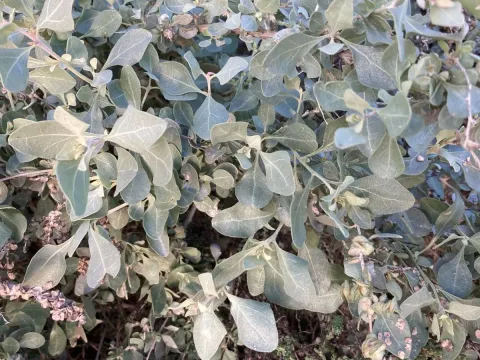
Sea orache
Atriplex halimus
Sowing sea orache is typically performed in early spring when the soil temperature consistently reaches 15–20 degrees Celsius. To ensure uniform germination, seeds should be pre-treated through soaking or cold stratification, which significantly increases the emergence rate in field conditions.
What the section contains
Sea orache
Vegetative propagation via cuttings is also a common and effective method, especially when establishing windbreaks or hedge rows. Cuttings are planted in nurseries during late summer to allow sufficient time for root system development before the onset of winter dormancy.
The planting density is determined by the end use; higher density is preferred for biomass production, while wider spacing is used for ornamental or erosion control projects. Monitoring growth is essential to ensure that the spacing remains adequate as the plants develop and expand their canopy.
The optimal seeding depth is shallow, usually around 1–2 centimeters, as the seeds need access to light and surface moisture to thrive. Maintaining a consistent moisture level in the topsoil during the first few weeks is crucial until the root systems are deep enough to access groundwater.
The plant's high adaptability allows it to be sown even on degraded or saline lands that are unsuitable for traditional crops. Farmers should time the sowing period to avoid potential late frosts, as young seedlings are sensitive to sudden temperature drops before they become established.
Atriplex halimus, a member of the Amaranthaceae family, is a well-known halophyte capable of thriving in highly saline soils. It is naturally evolved for Mediterranean-like climates, characterized by long, dry periods and episodic precipitation, making it exceptionally resilient.
The crop performs best in well-drained, sandy, or loamy soils with neutral to alkaline pH levels. While it can tolerate heavy clay soils, it is critical to ensure proper drainage to prevent waterlogging, which can cause root rot and severely hinder plant development.
Sunlight is the most critical factor for biomass accumulation; therefore, the planting site must be fully exposed to the sun. Shaded conditions lead to weak, elongated growth and a reduction in the plant's overall density and productivity, which is counterproductive for forage purposes.
The plant exhibits a wide temperature tolerance, easily enduring heat levels up to 35–40 degrees Celsius. Its foliage is covered with specialized glandular hairs that reflect excess sunlight and reduce transpiration, allowing the plant to conserve water during extreme drought events.
Fertilizer requirements are minimal due to the plant's efficient nutrient uptake mechanisms in poor soils. However, small applications of nitrogen during the peak growing season can significantly boost yield, particularly on land that has been reclaimed for agricultural use.
Yields of sea orache vary significantly based on the local climate, water availability, and management practices. With optimized irrigation and moderate maintenance, the plant can produce substantial amounts of dry matter annually, making it a valuable forage source in arid regions.
Periodic harvesting stimulates secondary branching, which in turn increases the biomass production over the growing season. A well-designed harvesting schedule allows for multiple cuts, ensuring a continuous supply of fresh, nutrient-rich growth for livestock consumption.
The nutritional profile of sea orache, including protein content and mineral levels, remains high even when grown on saline soils. This consistency makes it a strategic asset for farmers who operate in environments where traditional fodder crops are unable to survive.
Long-term productivity is a key advantage of sea orache, as it is a perennial shrub. Once established, the plantation can remain productive for many years without the need for annual reseeding, offering significant cost savings for long-term land management.
Peak yields are achieved when drip irrigation is utilized, as the plant is sensitive to the lack of available moisture in the soil profile. Comparative studies show that managed irrigation can nearly double the biomass output compared to non-irrigated areas, confirming the plant's responsiveness to water.
Sea orache is generally resistant to most common plant diseases. However, in conditions with poor air circulation and high humidity, fungal infections can occasionally develop. Preventive measures, such as proper spacing during planting, are usually sufficient to maintain a healthy plantation.
Insect pests, such as leaf-eating caterpillars, may occasionally target the foliage, but the high salt concentration in the plant's tissues acts as a natural deterrent. This chemical adaptation provides a significant level of protection compared to other more susceptible field crops.
Root system pests are rarely a problem unless the soil is consistently waterlogged. By ensuring good drainage, farmers can virtually eliminate the risk of root rot, which is the primary threat to the longevity and overall health of this robust species.
Chemical intervention is seldom required for this crop, as its ecological resilience allows for the use of biological control methods. Maintaining a healthy balance in the ecosystem is key to protecting the quality of the forage if the plants are used for feeding livestock.
Regular monitoring of the plantation is recommended to identify any local outbreaks early. Simple mechanical methods, such as pruning affected branches, are often enough to manage threats and keep the entire plantation in good condition for years.
Harvesting sea orache should ideally take place before the flowering stage to ensure the highest concentration of proteins and minerals in the leaves. Mechanical harvesters can be used to efficiently cut the biomass in large-scale operations, optimizing the forage production process.
The harvested material can be field-dried and baled, making it convenient for storage. Proper ventilation during the storage period is essential to prevent mold growth, which is critical for maintaining the nutritional value and safety of the fodder for livestock.
For ornamental or hedge-trimming purposes, the harvest is performed according to a structural maintenance schedule. The removed foliage and branches can be composted or used as protective mulch to help mitigate soil erosion and improve the organic content of the land.
Care must be taken during harvesting not to damage the base of the shrubs, as the plant needs to regenerate from the remaining stems. Leaving some growth behind is essential to ensure a quick recovery and robust growth for the next season.
The best time of day for harvesting is early in the morning or late in the evening when the temperatures are cooler. This practice helps reduce moisture loss from the cut material and preserves the integrity of the plant's nutritional components for better feed quality.