
Amazon sword plant
Echinodorus amazonicus
Description
Growing requirements
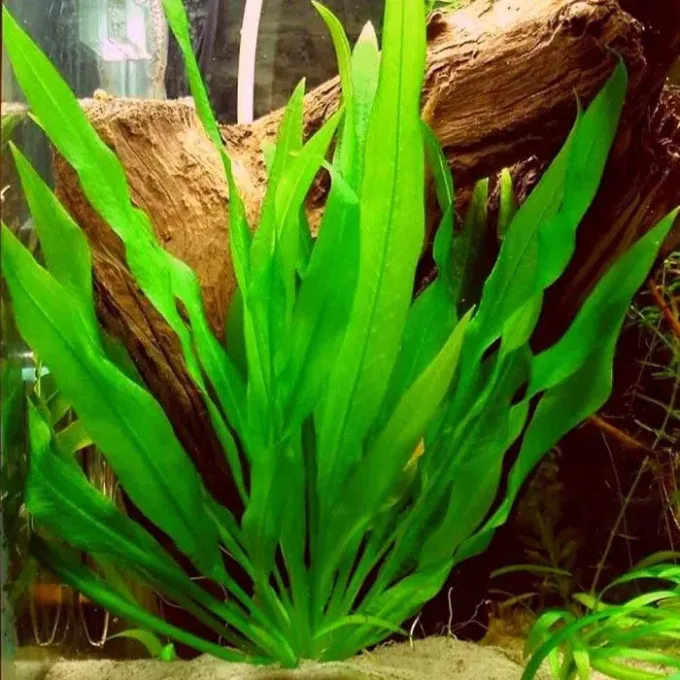
The Amazon sword plant (Echinodorus amazonicus) is a perennial aquatic plant belonging to the Alismataceae family. Originally from the tropical regions of South America, specifically the Amazon basin, this species has been successfully adapted for cultivation in various controlled aquatic environments.
Botanically, it is characterized by its rosette growth habit, featuring long, lance-shaped leaves that can reach significant heights. The plant possesses a robust root system, which necessitates a nutrient-rich substrate to support healthy leaf development and rapid growth rates in cultivation systems.
The crop thrives in temperatures ranging from 22 to 28 degrees Celsius. Light requirements are substantial; the plant requires moderate to high light intensity for optimal photosynthetic activity, with a recommended daily photoperiod of 10 to 12 hours to maintain structural integrity.
Soil and water conditions are paramount. The substrate should be rich in micronutrients, while the water parameters should ideally range from pH 6.0 to 7.5. Consistent water quality is essential for the metabolic processes that allow the plant to thrive in intensive farming environments.
Agronomic management involves the precise application of liquid fertilizers and carbon dioxide enrichment. Propagation is primarily achieved through vegetative means, specifically the development of adventitious plantlets on floral stalks, which are harvested once they develop sufficient root systems.
Main diseases and pests
The primary threat to Amazon sword plantations is the infestation of algae, which competes for light and nutrients. Integrated pest management strategies, including the regulation of light cycles and nutrient dosing, are critical for maintaining healthy, algae-free leaf surfaces.
Bacterial decay can occur if dead leaf tissue is not removed promptly, leading to an accumulation of organic matter. Regular pruning and maintenance of water filtration systems are standard practices to prevent the spread of infections across the cultivated batch.
Nutrient deficiencies, specifically iron chlorosis, are common issues in commercial setups. Symptoms include leaf yellowing and stunted growth, which can be corrected by targeted application of chelated iron supplements directly into the root zone or water column.
Pests such as snails can cause significant mechanical damage to the foliage. Biological control agents or physical removal are typically utilized to keep pest populations below the threshold that would negatively impact the marketability of the plants.
Environmental stress resulting from fluctuating water chemistry can also weaken the plant, making it susceptible to secondary pathogens. Maintaining a stable environment is the most effective proactive measure against the majority of health issues associated with this crop.