
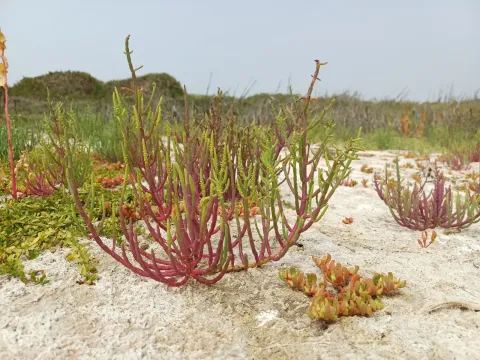
Sarcocornia
Sarcocornia
Sarcocornia is a succulent halophyte belonging to the Amaranthaceae family. Sowing is typically performed in the spring when the soil reaches stable, warm temperatures conducive to seed germination.
What the section contains


Sarcocornia
In natural conditions, the seeds sprout following heavy rains that wash excess salts from the topsoil layer. Under cultivation, producers must mimic these conditions by managing soil salinity levels during the early growth stages.
Seeds are sown at a shallow depth due to their small size, requiring consistent moisture to ensure high germination rates. Seedling trays or direct sowing in controlled plots are both viable options for establishment.
The plant demonstrates vigorous growth during the summer months, taking advantage of the warm climate and extended daylight. Proper spacing is essential to minimize intraspecific competition and ensure adequate nutrient access.
Establishing the crop requires careful consideration of the salt gradient. As the plants mature, their tolerance for higher salinity levels increases, allowing for the use of more saline water sources in the later stages of development.
As an obligate halophyte, Sarcocornia requires a saline environment to thrive. Unlike traditional crops, it utilizes sodium for osmotic regulation, which is vital for its internal physiological processes.
The crop is ideally suited for coastal areas or lands impacted by soil salinity where traditional agriculture is impossible. It can be irrigated with seawater or brackish water, reducing the demand for limited freshwater resources.
Sarcocornia demands full sun exposure for optimal photosynthesis. Shaded environments inhibit its succulent growth and lead to reduced biomass production, making open, sunny plots a primary requirement.
The soil should provide good drainage to prevent waterlogging, which can cause root rot. Sandy or silty soils are preferred, as they allow for the necessary salt flux around the root system without creating anaerobic conditions.
The plant is highly sensitive to frost, limiting its cultivation to tropical and temperate regions with mild winters. In colder climates, high tunnels or greenhouses are required to protect the crop throughout its growing season.
The yield of Sarcocornia is highly dependent on irrigation management and the quality of the soil or substrate. With optimized inputs, the plant produces substantial amounts of succulent biomass.
Multiple harvests are possible within a single season, as the plant responds well to pruning. Regular cutting stimulates lateral branching, which significantly boosts the total weight of the harvest per unit area.
For high-value culinary use, harvests are timed to capture the plant at its most succulent stage. For industrial applications, such as biofuels, the harvest is postponed to allow for maximum dry matter accumulation.
The crop's productivity makes it a candidate for sustainable agriculture in salt-degraded landscapes. By extracting salts from the soil, Sarcocornia assists in land reclamation while providing an economic return.
- Drip irrigation systems allow for precise delivery of salt and nutrient solutions.
- Nitrogen fertilization is essential for rapid biomass accumulation during the vegetative phase.
- Frequent pruning promotes a bushy growth habit and higher leaf density.
- Monitoring the salinity of the root zone ensures consistent growth rates.
- Proper post-harvest handling maintains the freshness and quality of the succulent stems.
Sarcocornia is naturally resistant to many common pests, largely due to the high salt concentration in its tissues. This characteristic simplifies pest management and supports organic or low-input farming practices.
However, fungal diseases may occur in greenhouse conditions where air circulation is poor or humidity levels are excessively high. Ensuring proper ventilation is the most effective preventive strategy.
Root pathogens can emerge if the soil remains waterlogged for extended periods. Maintaining proper drainage and preventing over-irrigation are critical to keeping the root system healthy and productive.
While Sarcocornia is largely pest-free, monitoring for occasional outbreaks of aphids or spider mites is recommended, especially in the early stages of growth before the salt content in the leaves reaches peak levels.
Strict sanitation protocols during the harvest help prevent the spread of diseases. Removing any infected plant material immediately helps maintain the health of the entire plantation and ensures long-term yield stability.
Harvesting Sarcocornia involves the manual or mechanical cutting of the stems. For culinary purposes, only the young, tender tips are selected to ensure the best texture and flavor profile.
The timing of the harvest is critical; delayed harvesting leads to the lignification of the stems, making them woody and less suitable for human consumption, though still usable for forage or other applications.
After being cut, the succulent stems are highly perishable and prone to desiccation. Rapid cooling and packaging are necessary to preserve the quality and marketability of the product during transit.
Post-harvest processing often includes washing to achieve the desired salt balance for culinary uses. The product is then distributed fresh, frozen, or dehydrated to maintain its shelf life.
Efficient logistics are key to managing the harvest, as the high water content makes the biomass heavy and delicate to transport. Coordinating harvesting schedules with processing facilities maximizes the economic efficiency of the operation.