
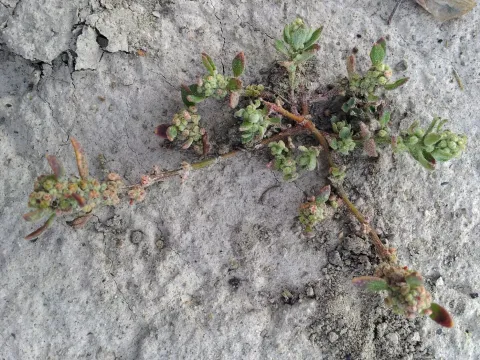
Chenopodium detestans
Chenopodium detestans
Chenopodium detestans, a member of the Amaranthaceae family, requires specific preparation of the seedbed to ensure optimal germination and early growth.
What the section contains
Chenopodium detestans
The sowing process is typically scheduled for early spring, once the soil temperature is consistently high enough to support active seedling development.
Precision planting is recommended to ensure proper spacing between seeds, which facilitates better light distribution and nutrient uptake for each plant.
The depth of sowing should be carefully regulated, as the seeds of this species are quite small and may fail to emerge if planted too deeply in the soil.
Proper field planning and mechanical seeding allow for efficient inter-row cultivation, which helps suppress weed competition during the critical emergence phase.
This crop thrives best in well-drained, fertile soils, showing a preference for sandy or silty loam textures that provide excellent aeration for root systems.
Chenopodium detestans requires full exposure to sunlight for maximum biomass production, as partial shading significantly retards the maturation process.
While the plant is known for its ecological flexibility, consistent moisture levels during the vegetative growth phase contribute to higher yield potential.
Soil pH levels should be maintained in the neutral to slightly alkaline range to optimize the availability of macronutrients like nitrogen and potassium.
Balanced fertilization programs, including both nitrogen and organic matter, are essential for supporting the rapid development of vegetative plant tissue.
The crop is susceptible to several common agricultural pests, including various beetle species that target the foliage during the juvenile stages of growth.
Fungal diseases, often exacerbated by poor air circulation or high humidity in dense planting patterns, can pose a risk to overall crop health.
Integrated Pest Management (IPM) strategies, including crop rotation and the destruction of potential host weeds, are vital for sustainable cultivation.
Preventative measures such as choosing suitable planting sites and avoiding waterlogged fields are crucial to mitigating the risk of root-related pathogens.
Consistent monitoring and early detection of pest or disease symptoms remain the primary tools for protecting the crop and ensuring a high-quality harvest.