
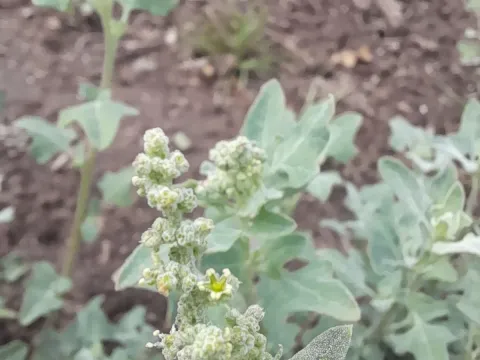
Chenopodium cordobense
Chenopodium cordobense
Chenopodium cordobense belongs to the Amaranthaceae family and is recognized for its adaptive properties, similar to other related species like quinoa or grain amaranth.
What the section contains
Chenopodium cordobense
The sowing season typically begins in the spring, once soil temperatures are sufficient to support consistent germination, usually above 10-12 degrees Celsius.
Due to the small size of the seeds, they must be sown shallowly, ideally at a depth of 1-2 centimeters, to ensure they do not exhaust their energy reserves before reaching the surface.
Row spacing should be managed to allow for mechanical weeding in the early vegetative stage, especially since the initial growth of the plant can be slow compared to weeds.
Proper seedbed preparation is crucial; the soil should be fine and firm to ensure good seed-to-soil contact, which is vital for uniform emergence in varied environmental conditions.
This crop is highly prized for its drought tolerance, making it an excellent candidate for semi-arid environments where traditional cereal crops might fail.
It thrives in full sunlight, which is necessary to maximize photosynthesis and ensure the proper development of inflorescences and seed maturation.
The crop prefers well-drained soil and demonstrates a notable tolerance for salinity, which allows for cultivation in marginal areas unsuitable for common crops.
Temperature requirements are moderate, though the plant is resilient enough to withstand significant fluctuations typical of its native South American habitats.
Soil nutrient requirements are relatively low, but sufficient phosphorus and potassium levels in the soil can significantly improve the quality and yield of the harvest.
Common pests include leaf-feeding insects and various aphids that can stress the young plants during their most vulnerable growth stages in the first few weeks.
Fungal pathogens such as downy mildew can become an issue if environmental humidity remains high for an extended period, leading to foliage degradation.
Integrated pest management, including crop rotation and the use of resistant varieties, is recommended to mitigate the risk of pathogen buildup in the soil.
Root rots are frequently associated with waterlogged soil conditions, highlighting the importance of proper land drainage in fields intended for this cultivation.
Monitoring the field during the critical flowering period is essential, as this is when the crop is most susceptible to significant damage from migratory pests.
Harvesting should take place when seeds have fully matured and moisture levels are low, which helps prevent seed shattering and ensures long-term viability.
The harvest timing is usually determined by the color change of the panicles and the physical hardness of the seeds, which should be dry to the touch.
Mechanized harvesting requires careful calibration of the combine's settings, specifically the fan speed, to avoid blowing away the small, lightweight seeds.
Post-harvest processing involves thorough cleaning to remove impurities, followed by drying the seed to a moisture level below 12 percent for safe storage.
Storage facilities must be dry and cool to maintain the nutritional value and germination potential of the seeds over the long term, preventing mold growth.