
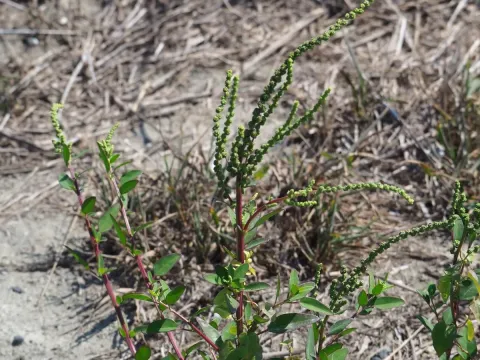
Chenopodium acuminatum
Chenopodium acuminatum
Chenopodium acuminatum belongs to the Amaranthaceae family, which was formerly classified within the Chenopodiaceae family. Sowing is typically performed in spring once the soil temperature reaches 8–10°C, ensuring uniform germination.
What the section contains
Chenopodium acuminatum
To obtain high-quality planting material, seeds often require stratification because they possess a distinct dormancy period. Seeds are planted at a depth of 1–2 centimeters, depending on the soil structure.
The optimal planting pattern involves row spacing of 45–60 centimeters, which facilitates subsequent maintenance and mechanical field operations. The target plant density ranges from 150,000 to 200,000 plants per hectare.
The seeds of this crop demonstrate high germination rates; however, they require sufficient moisture during the first two weeks post-sowing. Under arid conditions, seedling emergence can be sparse, negatively impacting final productivity.
It is essential to avoid over-crowding the crops, as high density promotes lodging and reduces the amount of solar radiation reaching the lower layers of the plant canopy.
This crop is a light-loving plant that requires open areas with minimal shading. It adapts well to various soil types, including loams and sandy soils, provided that nitrogen compounds are present in sufficient quantities.
The plant exhibits moderate drought tolerance, although optimal growth is achieved through regular rainfall or the implementation of drip irrigation during the active vegetative phase.
Chenopodium acuminatum does not have specific temperature requirements, developing successfully in temperate climates. It tolerates brief temperature fluctuations but is sensitive to severe frosts during the early stages of development.
Cultivation is preferred on fertile, neutral soils with a pH ranging from 6.0 to 7.5. In acidic soils, liming is required to optimize nutrient uptake.
Suitable precursors for this crop include small-grain cereals and legumes, which improve soil structure and promote the accumulation of organic matter.
The green mass yield of Chenopodium acuminatum can reach 20–30 tons per hectare under intensive cultivation technology. Results are highly dependent on soil fertility levels and the timeliness of fertilization.
Seed harvesting requires precise timing to prevent shattering, which is a common trait among many species of the Amaranthaceae family. Seed yields range from 0.8 to 1.5 tons per hectare.
The application of nitrogen-phosphorus fertilizers during the budding phase significantly increases biomass output. The effectiveness of fertilization is evidenced by the increased size of the plant's vegetative organs.
The crop's biomass is valued for its high protein content, making it a promising raw material for silage production. Nutritional value is maintained until the early seed ripening phase.
Varieties adapted to regional conditions show stable results even under unfavorable weather conditions, maintaining productivity levels comparable to regional averages.
The most common diseases include fungal infections such as downy mildew and powdery mildew, which affect leaves under conditions of high humidity. Crop rotation is essential for disease prevention.
Among pests, the beet leaf miner and aphids pose the greatest danger. They extract sap from young leaves, slowing down the overall growth of the plant.
Weed control within the crops is critical, as Chenopodium species develop slowly during early growth stages and can be suppressed by aggressive weed species.
Integrated pest management (IPM) is recommended, combining agronomic practices with biological agents to control harmful insect populations.
The use of chemical fungicides is justified only when the economic injury threshold is reached, minimizing chemical exposure to the final harvest.
Harvesting for green mass is carried out during the flowering phase when the plant possesses maximum nutritional value. Using forage harvesters allows for rapid preparation of raw material for ensiling.
Seed harvesting is performed via direct combining when the majority of the panicles acquire a brownish hue. It is important to conduct operations during morning or evening hours to minimize losses from shattering.
Post-harvest processing involves cleaning and drying seeds to a moisture level of 12–14%. Storage is conducted in dry, well-ventilated facilities protected from pests.
Plant residues left after harvesting can be incorporated into the soil as green manure, enriching it with organic matter and nitrogen.
In seed production, special attention is paid to the purity of the planting material and the removal of impurities from other varieties or Chenopodium species.