
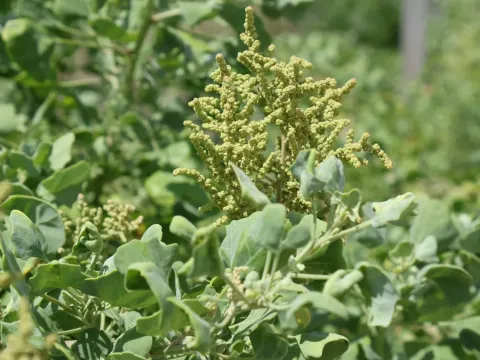
Chenopodium oahuense
Chenopodium oahuense
Chenopodium oahuense, commonly known as the Hawaiian goosefoot, is a unique woody shrub or small tree belonging to the Amaranthaceae family.
What the section contains
Chenopodium oahuense
The species is endemic to the Hawaiian Islands and has evolved to thrive in diverse environments, ranging from dry coastal areas to higher-elevation volcanic landscapes.
As an adaptive crop, it requires well-drained, porous soils and demonstrates significant tolerance to drought conditions, making it a resilient botanical subject.
Sun exposure is a critical factor for its development; in shaded or overly humid environments, the plant struggles to maintain its structural integrity.
Proper agricultural practice for this species focuses on replicating its natural habitat by ensuring minimal watering and maximum exposure to natural light.
Historically, the plant played a role in the local ecology of Hawaii, serving as a stabilizer for volcanic soil prone to erosion.
While not a primary commercial crop like its cousin quinoa, its seeds hold potential for exploration in terms of drought-resistant grain production.
The yield of biomass is inherently linked to the specific microclimate of the planting site and the age of the individual shrub.
Ongoing research aims to utilize the genetic traits of this species to enhance the resilience of related grain crops against global climate changes.
Harvesting techniques remain experimental, focusing on sustainable collection methods that do not deplete wild populations.
The primary threat to the stability of Chenopodium oahuense populations is the encroachment of invasive plant species in its native range.
Insect pests, specifically those capable of defoliating the woody structures, pose a recurring challenge for young and fragile specimens.
Root pathogens are a major risk factor if the plant is subjected to poor soil aeration or excess moisture during the rainy season.
Human activities, such as land clearing and grazing, have significantly impacted the historical density of this unique island plant.
Effective management requires strict adherence to biodiversity protection protocols and constant monitoring for early signs of fungal or viral infections.