
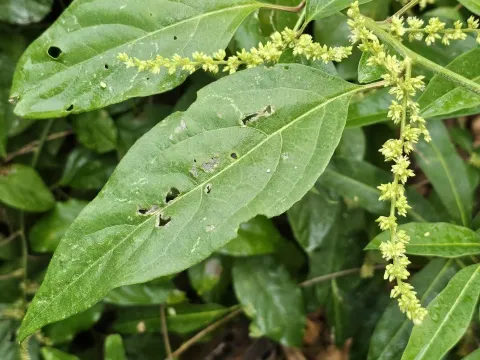
Chamissoa
Chamissoa
Chamissoa belongs to the Amaranthaceae family and is recognized as a heat-loving plant. While it grows as a perennial in tropical regions, in temperate zones, it is typically cultivated as an annual, requiring consistent warm temperatures throughout its growing season.
What the section contains

Chamissoa
The ideal time for sowing is when soil temperatures stabilize at 18-20 degrees Celsius. Seeds are small and should be sown at a shallow depth, barely covered with soil, to ensure they receive the necessary light exposure for optimal germination.
In commercial cultivation, proper plant spacing is essential for high productivity. Planting should be done in rows with a distance of 30-40 centimeters between plants to allow for healthy rosette development and proper air circulation, which reduces humidity-related diseases.
Before sowing, land preparation is crucial. This includes weed removal and the incorporation of well-rotted organic matter into the topsoil to provide a nutrient-rich foundation for the crop. Maintaining a weed-free environment is vital during the early establishment phase.
The time from sowing to the first harvest typically ranges from 45 to 60 days. This period is highly dependent on light intensity and temperature, as Chamissoa thrives under long, sunny days, which are necessary for vigorous leaf production.
Chamissoa requires high solar intensity to reach its full potential. Plants grown in shaded areas often suffer from reduced vigor and poor foliage quality. Consistent exposure to direct sunlight is the primary factor driving the development of high-quality, succulent leaves.
The crop prefers fertile, well-draining loamy soils with a near-neutral pH balance. Water management is a key aspect of its agronomy; the soil should be kept consistently moist but never waterlogged, as excess moisture can trigger root system deterioration.
Ideal temperatures for growth fall within the 22-28 degrees Celsius range. In regions prone to sudden night-time temperature drops, greenhouse cultivation is highly recommended to protect the crop from cold stress, which can halt development and induce flowering.
Nutrient management involves balanced fertilization with a focus on nitrogen to stimulate leaf growth. However, one must avoid over-application, as excessive nitrogen can increase the risk of pest attacks and lower the shelf life of the harvested product.
Regular irrigation is best achieved through drip systems, which minimize water contact with the foliage. Keeping leaves dry is an effective preventive measure against fungal pathogens that could otherwise develop rapidly in a humid canopy.
Yield productivity is closely tied to the harvest frequency and the plant management technique. Selective leaf harvesting, rather than cutting the entire plant, encourages continuous growth and allows for multiple yields from the same crop throughout the season.
Harvesting should be timed before the leaves begin to mature and toughen. Younger leaves are more flavorful and hold greater market value. Regular pruning of the terminal buds promotes lateral branching, significantly increasing the total amount of harvestable foliage per plant.
Under optimal conditions, consistent yields of high-quality greens can be achieved. Modern cultivation methods, including controlled atmosphere storage, are recommended to preserve the freshness and nutritional quality of the leaves immediately after harvest.
The output of biomass is influenced by soil aeration and the use of mulch. Mulching helps maintain soil temperatures and prevents evaporation, ensuring that the plant has continuous access to the moisture needed to maximize its growth rate.
Data from successful production plots indicate that crop rotation and soil fertility maintenance are the most significant factors influencing year-over-year yield stability. Proper documentation of the growth stages helps in refining the harvest cycle for maximum output.
Common pests affecting Chamissoa include aphids and spider mites, which can cause significant damage to foliage. If left unchecked, these insects can lead to stunted growth and transmit various viral diseases that significantly impact crop quality.
Powdery mildew represents the most frequent fungal challenge, particularly when plant density is too high. Improving ventilation and maintaining adequate distance between plants are the most effective management strategies to mitigate the spread of fungal spores.
For pest management, an integrated approach is recommended, utilizing biological controls such as predatory mites or eco-friendly insecticidal soaps. Preventive spraying at the first sign of insect presence can avoid the need for more intensive chemical interventions.
Root rots are predominantly caused by poor soil drainage. When preparing fields, ensuring a slight slope or installing drainage channels can prevent water accumulation, especially during the rainy season, which is critical for preserving the root structure.
Weed competition is a constant threat that must be addressed through manual or mechanical weeding. Protecting the young plants until they establish a full canopy is essential for reducing the risk of pest habitats forming within the immediate crop vicinity.