
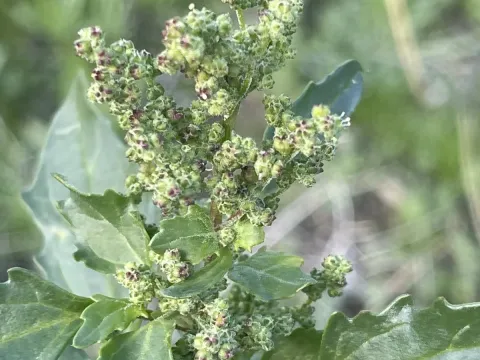
Chenopodiastrum
Chenopodiastrum
Sowing Chenopodiastrum requires well-prepared, warm soil as the seeds are sensitive to cold environments. The ideal time for planting is late spring when soil temperatures consistently reach 10–12 degrees Celsius.
What the section contains


Chenopodiastrum
Due to the small size of the seeds, they should be sown at a shallow depth of 1–2 centimeters. Proper seed-to-soil contact is essential for uniform germination and establishment.
Row spacing should be maintained at 30–45 centimeters to provide sufficient space for development while allowing for mechanized weeding between rows during the early stages of growth.
Consistent soil moisture is critical in the first week after sowing to ensure the seeds break dormancy and emerge successfully without drying out in the topsoil layer.
By optimizing the sowing rate and depth, growers can achieve a uniform crop density that maximizes photosynthetic efficiency and overall field productivity.
Chenopodiastrum belongs to the Amaranthaceae family and is highly valued for its robust adaptation to diverse environments. It thrives best in fertile, well-draining loamy soils with a neutral pH.
The plant demonstrates significant drought tolerance once established, though supplemental irrigation can boost biomass production during prolonged dry spells in the mid-summer season.
High levels of solar radiation are necessary for optimal growth. Shading from weeds or excessive plant density can significantly reduce the potential yield and the quality of the harvest.
Soil structure is important for root development; thus, incorporating organic matter and maintaining good aeration is recommended to prevent waterlogging and compaction.
Balanced fertilization, particularly with adequate nitrogen during the vegetative stage, supports the development of lush, healthy foliage and strengthens the plant's resilience.
The yield potential of Chenopodiastrum is highly dependent on managing the crop during its peak growth phase. With proper care, it offers substantial output for both grain and fodder purposes.
The seeds are increasingly recognized for their nutritional profile, providing a high density of proteins and minerals, making the crop a versatile choice for specialized agricultural markets.
As a forage crop, the green mass of Chenopodiastrum is characterized by high palatability and nutritional density, which makes it an excellent supplement for livestock feed mixtures.
Effective weed control and pest management are the primary drivers of yield, as the crop performs best when it does not have to compete for resources with unwanted vegetation.
Continuous research into improved varieties and precise agronomic timing allows farmers to push the limits of productivity for this resilient botanical species.
Common agricultural pests affecting Chenopodiastrum include aphids and various beetles, which can cause significant damage to young leaves and stems, potentially reducing overall plant vigor.
Fungal diseases like downy mildew and powdery mildew remain the primary concerns for crop health, especially in conditions characterized by high humidity and limited air circulation.
Nematode infestations can occur in fields with poor crop rotation history, leading to stunted root systems and reduced ability to uptake water and essential nutrients.
Integrated Pest Management (IPM) strategies, including early detection and the use of resistant cultivars, are essential to mitigate these threats and ensure crop viability.
- Regular monitoring of fields for early signs of infection.
- Strict adherence to crop rotation to reduce soil-borne disease pressure.
- Application of environmentally safe pesticides when economic thresholds are met.
Harvesting Chenopodiastrum for grain requires careful timing to capture the crop at physiological maturity. Waiting too long may result in seed shattering and yield loss.
For grain collection, combines should be adjusted to operate at lower drum speeds to prevent seed coat breakage while effectively separating the grain from the chaff.
If the target is green biomass, harvesting should occur before the flowering stage to ensure the stems remain succulent and nutrient-dense for animal consumption.
Post-harvest processing is crucial; the grain must be cleaned of impurities and dried to a safe moisture level to prevent spoilage during long-term storage.
Proper harvest logistics, including the scheduling of machinery and storage facilities, play a vital role in maintaining the economic profitability of the operation.