
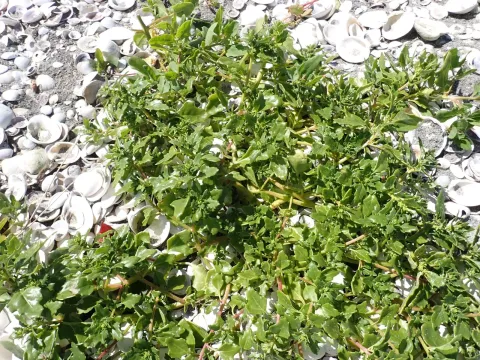
Chenopodium ambiguum
Chenopodium ambiguum
Chenopodium ambiguum, a member of the Amaranthaceae family, requires careful preparation to establish a robust and healthy crop during the early growing season.
What the section contains
Chenopodium ambiguum
Sowing should take place once the soil temperatures consistently reach 10-12 degrees Celsius, typically in early spring, to ensure rapid germination.
Seeds are usually sown in rows spaced 30 to 40 centimeters apart, allowing for optimal nutrient uptake and exposure to sunlight throughout the development phase.
It is important to ensure that the sowing depth is shallow, approximately 1 to 2 centimeters, as the small seeds are light-sensitive and may fail to sprout if buried too deeply.
Consistent soil moisture is essential during the first two weeks post-sowing to support the delicate root system of the emerging seedlings.
This crop thrives in sunny locations, as high light intensity is crucial for the development of dense, high-quality foliage and overall plant vigor.
Well-drained, fertile soil with a neutral pH is preferred, as this prevents waterlogging and promotes a healthy environment for root respiration.
While the plant exhibits some drought tolerance, supplemental irrigation during peak growth periods is recommended to maximize the total green biomass yield.
Nitrogen-based fertilization should be applied during the early growth stages to support rapid stem and leaf expansion, which is essential for harvest quality.
Maintaining adequate air circulation between plants is vital, as it reduces humidity around the leaves and prevents common physiological disorders.
Key pests include aphids and various leaf-mining insects that can compromise the integrity of the foliage and hinder photosynthesis in affected plants.
Fungal pathogens, particularly those causing powdery mildew, can proliferate in high-humidity environments, necessitating careful management of planting density.
Effective weed control during the establishment phase is critical, as young Chenopodium ambiguum plants are susceptible to competition from faster-growing weeds.
Integrated pest management strategies are advised, emphasizing the use of beneficial insects and biological controls over synthetic chemical applications.
Field monitoring should be consistent to identify early signs of nutrient deficiencies or pest pressure, allowing for timely and localized interventions.
Harvesting is typically performed within 60 to 80 days after germination, depending on the desired leaf size and the specific environmental conditions of the region.
The shoots should be cut using precision tools to avoid damage to the base of the plant, ensuring the potential for regrowth or secondary harvesting.
It is crucial to harvest before the plant enters the reproductive phase, as the transition to flowering significantly reduces the palatability and nutrient content.
Post-harvest handling must be swift, involving immediate cooling to prevent wilting and to preserve the freshness and marketability of the produce.
Sorting and cleaning should be conducted immediately after harvest to remove impurities and ensure compliance with quality standards before distribution.