
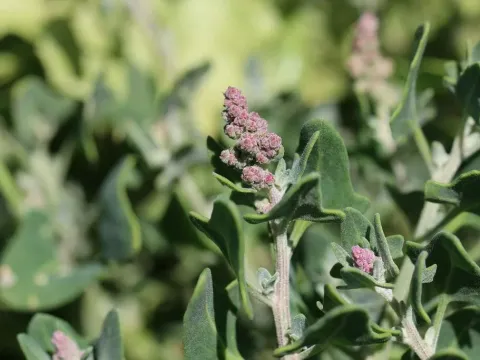
Chenopodium petiolare
Chenopodium petiolare
Chenopodium petiolare is a member of the Amaranthaceae family, known for its resilience and adaptability in various agricultural systems. Sowing is typically performed in early spring once soil temperatures reach a stable 8–10°C.
What the section contains
Chenopodium petiolare
Seeds should be sown at a shallow depth of 1.5–2 cm to ensure optimal germination rates and rapid emergence, which is critical for establishing a uniform crop stand.
Using a row spacing of 30–45 cm provides adequate space for plant development and facilitates weed control operations during the initial growth stages.
The seeding rate is usually adjusted based on seed viability, typically ranging from 2 to 4 kilograms per hectare, depending on the desired plant density for high-yield production.
Successive planting, with a two-week interval, allows farmers to stagger the harvest period, ensuring a steady supply of biomass throughout the favorable growing season.
This crop thrives in well-drained soils ranging from sandy loams to heavier silt soils, provided the pH level remains neutral to slightly alkaline for optimal nutrient uptake.
Chenopodium petiolare demonstrates strong drought tolerance, although maximum vegetative production is achieved when soil moisture is consistent throughout the vegetative stage.
It is a highly light-demanding crop; therefore, it should be planted in open field conditions where it can receive direct sunlight without interference from shadows or surrounding foliage.
The plant performs best under temperate conditions with average temperatures of 18–25°C, making it suitable for a wide range of climatic zones across different continents.
Fertilization with balanced NPK fertilizers significantly boosts leaf development, which is crucial for those utilizing the plant primarily for green forage purposes.
The primary economic use of Chenopodium petiolare is its production of protein-rich green biomass, which serves as an excellent ingredient in livestock feed programs.
Depending on soil fertility and management practices, the crop can yield between 150 and 300 decitons of green mass per hectare across multiple harvests during a single season.
The seeds are dense in nutritional content, offering a valuable source of proteins and healthy fats, positioning the crop as a promising alternative for specialty food and feed markets.
For high-quality forage, harvesting should occur during the budding phase before the lignification of stems, ensuring better digestibility and nutrient absorption for livestock.
The regenerative growth capacity of this species allows it to recover quickly after mowing, providing significant multi-cut potential for large-scale agricultural operations.
In high humidity environments, powdery mildew can emerge, necessitating improved field ventilation and the avoidance of high-density planting to reduce the risk of infection.
Pests such as aphids and various species of weevils can cause significant damage to young shoots, potentially affecting the overall plant vigor and final harvest quality.
Root rot is often associated with poorly drained fields, highlighting the importance of proper land leveling and drainage management as a proactive preventive measure.
Weed management during the early establishment phase is essential, as the crop's slow initial growth can make it vulnerable to competition from more aggressive weed species.
- Implement a diverse crop rotation strategy.
- Monitor for pests using economic threshold guidelines.
- Ensure adequate field spacing to reduce humidity levels.