
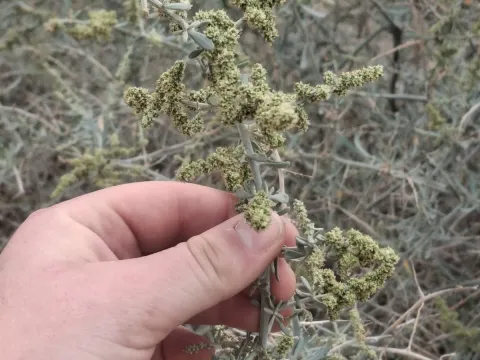
Chenopodium nitrariaceum
Chenopodium nitrariaceum
Chenopodium nitrariaceum is a perennial shrub belonging to the Amaranthaceae family, native to the arid landscapes of Australia. It is classified as a halophyte, a plant adapted to environments with high levels of soil salinity where common crops struggle to survive.
What the section contains
Chenopodium nitrariaceum
The morphology of this plant includes woody stems and small leaves covered with a mealy wax, which functions as an evolutionary adaptation to reduce water loss through transpiration in extreme heat and drought conditions.
For cultivation, it requires sunny locations and performs best in well-drained sandy or loamy soils. It has a high tolerance for alkaline soil conditions and can effectively thrive in areas affected by desertification.
Agricultural techniques involve minimal irrigation requirements, as the plant is specifically suited for dryland management. It plays a significant role in ecological restoration and preventing further soil degradation in arid regions.
Economically, the species serves as a potential source of biomass and forage, providing livestock with feed in regions where traditional grasses cannot grow due to high salt concentrations or rainfall variability.
The main biological threats to Chenopodium nitrariaceum include various species of coleoptera and lepidoptera larvae that feed on the foliage and younger stems of the shrub.
Fungal pathogens pose a risk primarily during periods of high humidity or in soils with poor drainage, which can lead to crown and root rot development in the plantation.
Proactive management of these threats includes the maintenance of optimal spacing between plants to ensure adequate ventilation and prevent the microclimate from becoming overly humid.
Weed control is critical during the establishment phase, as the young plants are vulnerable to competition from more vigorous invasive species in the early growth stages.
Given its natural resistance mechanisms, the plant generally requires fewer chemical interventions compared to more domesticated species, making it an ideal candidate for low-input agricultural systems.