
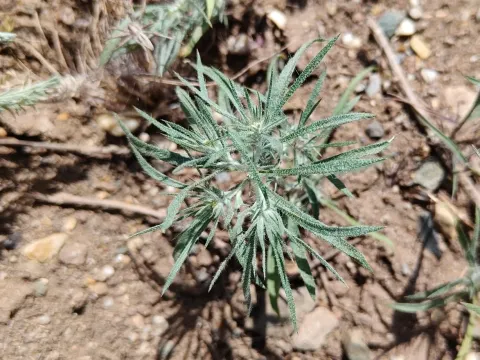
Ceratocarpus
Ceratocarpus
The sowing of Ceratocarpus is best timed to coincide with natural dormancy breaks, primarily during the early spring or late autumn periods.
What the section contains

Ceratocarpus
Seeds require a specific period of cold stratification, which is most effectively achieved by sowing under winter conditions in natural habitats.
Shallow depth of sowing is crucial because the tiny seeds do not have enough energy reserves to emerge from deep within the soil profile.
Ensuring proper soil-to-seed contact via light rolling can significantly increase germination rates in sandy or saline substrates.
Consistent moisture during the initial germination phase is vital, despite the adult plant's ability to withstand severe drought conditions later on.
Ceratocarpus belongs to the Amaranthaceae family and is highly specialized for life in extreme arid and semi-arid landscapes.
It is notably recognized for its exceptional salt tolerance, often thriving in soil conditions that are prohibitive for conventional commercial crops.
The plant demands high light intensity and performs poorly in shaded areas, where competition from other vegetation is typically higher.
It prefers well-aerated, light-textured soils but demonstrates remarkable plasticity in adapting to various saline desert ground conditions.
The cultural requirements are minimal, focusing mostly on selecting sites where the plants are not crowded out by aggressive, fast-growing weeds.
Yield production is highly dependent on seasonal precipitation patterns, as the plant relies on spring moisture for primary vegetative growth.
In semi-desert environments, Ceratocarpus provides a supplementary forage source rather than a primary high-biomass production crop.
Seed yield varies significantly from year to year based on temperature fluctuations during the flowering and fruit-setting stages.
The forage value of the green mass is highest during the vegetative stage, decreasing rapidly as the plant matures and tissues lignify.
While not a heavy producer in absolute terms, its stability in harsh climates makes it a valuable asset for maintaining biodiversity in pasturelands.
Due to its specialized metabolism, Ceratocarpus exhibits high resistance to most common fungal and bacterial diseases that plague typical crops.
Insect pests associated with the Amaranthaceae family represent the primary biological threat to its healthy development during the growing season.
Root damage caused by burrowing rodents can occur in regions where populations are high, impacting the plant's stability and uptake capacity.
Excessive humidity can lead to root rot issues, as the plant is evolved to cope with dry, well-draining desert or steppe soil environments.
Invasive weed competition during the seedling stage is the most significant anthropogenic threat, often requiring active weed management.
Harvesting for forage purposes should ideally occur before the plant enters the reproductive stage to ensure maximum protein content.
Seed harvesting requires careful timing; gathering must be done just before natural dispersal occurs to prevent yield loss in the field.
Mechanical harvesting is challenging due to the plant's delicate structure and typically low-growing habit in open natural fields.
Post-harvest handling requires immediate moisture reduction, as the succulent parts can easily develop mold if stored in bulk while wet.
Proper storage involves cool, dry conditions with adequate aeration to maintain seed viability for future sowing cycles over several years.