
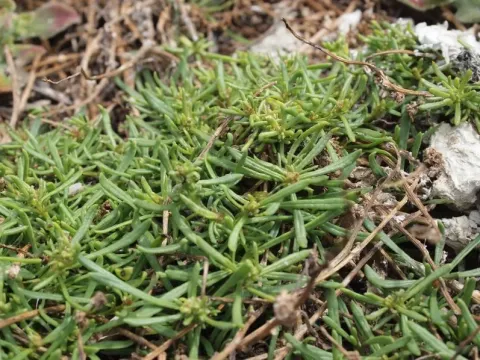
Madeiran beet
Beta patula
The Madeiran beet (Beta patula) is a rare perennial herbaceous plant belonging to the Amaranthaceae family. It is an endemic species strictly limited to the rocky coastal areas of the Madeira archipelago, where it has evolved unique survival strategies.
What the section contains
Madeiran beet
Regarding environmental requirements, this plant is highly adapted to maritime conditions, including high salinity and consistent ocean breezes. It thrives in temperate, humid climates and is sensitive to extreme heat or prolonged drought, which are atypical for its native habitat.
Botanically, Beta patula is characterized by a spreading growth habit, which helps it anchor into rocky substrates. Its root system is exceptionally efficient at extracting moisture and minerals from narrow crevices, allowing it to survive in nutrient-poor volcanic soils.
Soil aeration is a critical requirement for this species. The plant demands well-drained conditions to prevent root rot, as the species is accustomed to porous volcanic rock rather than heavy clay-like soils. Adequate light exposure is also essential for maintaining its vigor.
While the Madeiran beet is not cultivated for agricultural production, it possesses immense value for plant breeding. Its resilience to salinity and specific pathogens makes it an important source of genes for the improvement of common garden and sugar beet varieties.
The survival of the Madeiran beet is threatened primarily by its extremely restricted range and competition from invasive plant species. As an island endemic, it is highly susceptible to local environmental changes and habitat degradation caused by human activity.
Common agricultural pests affecting the Beta genus, such as the beet leaf miner and various aphids, can pose a threat to individual plants. However, in its natural, isolated habitat, the intensity of these attacks is often limited by natural biological controls.
Pathogenic fungi, particularly those causing leaf spot diseases like Cercospora, represent a significant threat if environmental conditions become excessively damp. These diseases can rapidly spread in dense patches, leading to reduced photosynthetic capacity.
Hybridization with other species of the Beta genus is a notable concern. If non-native beets are introduced into its range, cross-pollination could jeopardize the genetic integrity of this unique species, making conservation efforts more difficult.
Climate change poses a long-term risk, as altered precipitation patterns and rising sea levels threaten the cliffside environments that the Madeiran beet depends upon. Continuous monitoring and ex-situ conservation are vital for the protection of this species.