
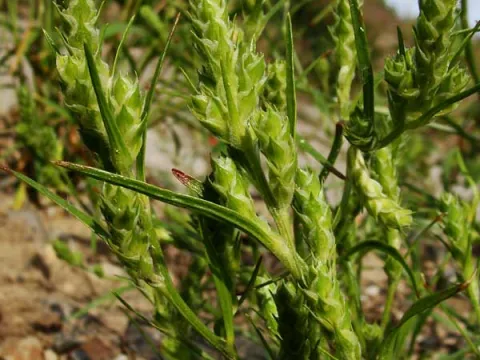
Long-beaked seed
Corispermum elongatum
Corispermum elongatum, commonly known as long-beaked seed, is an annual plant belonging to the Amaranthaceae family, adapted for cultivation in varied soil conditions.
What the section contains
Long-beaked seed
The sowing period is typically initiated in mid-spring once soil temperatures reach levels conducive to rapid germination, ensuring the seeds are placed at a shallow depth of 1-2 centimeters.
Proper drill spacing is essential for maximizing yield, whether the goal is to harvest seed for industrial oil or to produce biomass for fodder, allowing for easy management of the field.
Preparation of the seed bed is key; clearing weeds and ensuring a loose soil structure helps the plant establish a robust root system early in its growth cycle.
Sowing density is managed based on the soil fertility and intended end-use, with lower densities often used when cultivating for seed production to reduce competition between individual plants.
This crop is highly valued for its ability to thrive in arid and semi-arid regions, displaying significant tolerance to drought conditions and poor soil quality, including saline soils.
It prefers well-drained, light-textured soils where its long taproot can effectively access deep moisture, reducing the reliance on frequent irrigation or rainfall.
Sunlight exposure is a critical factor for the successful development of Corispermum elongatum, as it exhibits a strong phototropic response and performs best in open field environments.
While the plant is hardy, it requires protection from waterlogging, which is detrimental to its root health and can lead to rapid onset of various fungal infections.
Temperature requirements are generally flexible, but the plant shows the most vigor during warm summer months, capitalizing on heat to accelerate its metabolic processes.
Common agricultural threats include soil-borne pests such as wireworms, which can severely damage the young seedlings, and various aphids that may cluster on the stems during active growth.
Fungal diseases like powdery mildew may appear if humidity levels remain consistently high or if the canopy becomes too dense to allow for sufficient air circulation.
Integrated pest management strategies involve crop rotation to disrupt the life cycle of soil-dwelling pests and regular scouting to identify localized infestations before they spread.
The plant is relatively resistant to environmental stress, meaning that most control measures are preventative rather than curative, focusing on maintaining field hygiene and optimal plant spacing.
Chemical intervention is generally kept to a minimum to preserve the ecosystem balance in the field, as the crop is often utilized in sustainable farming systems.
Harvesting should be timed carefully to prevent seed shattering, as the seeds of Corispermum elongatum tend to release easily once they reach full maturity on the plant.
Direct combining is the standard practice, ideally performed when the seeds have turned color and moisture content is dropping but before significant shedding occurs.
Post-harvest handling requires quick cleaning and drying to reach a moisture level suitable for safe storage, preventing the risk of fungal growth or self-heating of the grain mass.
When grown for green fodder, the harvest should take place before the onset of reproductive stages, ensuring that the plant tissue remains tender and high in nutritional value for livestock.
Storing the harvested material in well-ventilated silos or bins is recommended to maintain seed viability and prevent quality degradation over the storage duration.