
Lindley's saltbush
Atriplex lindleyi
Description
Growing requirements
Lindley's saltbush (Atriplex lindleyi) is a hardy annual species within the Amaranthaceae family. Originating from the arid zones of Australia, it is highly valued for its ability to thrive where other vegetation fails.
The plant is categorized as a halophyte, meaning it is biologically equipped to manage high salinity levels in the soil. This trait makes it an ideal candidate for restoring degraded landscapes and reclaimed saline lands.
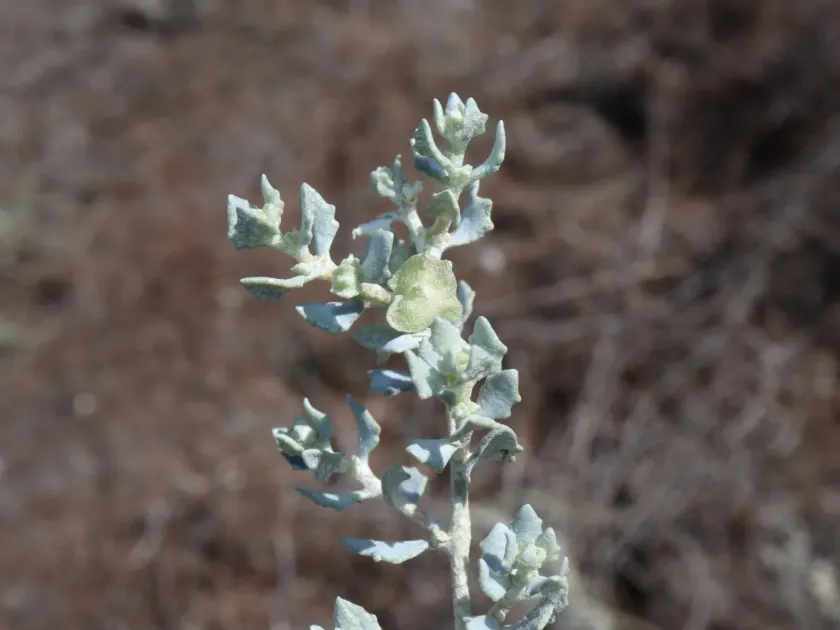
Its botanical structure includes distinct, often wing-shaped bracts that protect the seeds and aid in dispersal. This adaptive mechanism ensures the survival of the species across variable and harsh desert topographies.
In terms of climatic requirements, this crop demands significant solar exposure and low annual rainfall. It is perfectly adapted to desert environments and remains productive during heat waves that often devastate conventional forage species.
Economically, it serves as a critical forage resource. Its nutritional profile, coupled with its persistence in poor soil conditions, supports sustainable livestock grazing in arid areas where water resources are extremely limited.
Main diseases and pests
The primary threat to the health of Lindley's saltbush is waterlogging. Excessive moisture in the soil quickly leads to root oxygen deprivation and subsequent infection by soil-borne fungal pathogens.
Common insect pests such as aphids and leaf-eating beetles can compromise the plant during its vegetative stage. Regular scouting of the fields is essential to prevent significant loss of photosynthetic leaf area.
Fungal diseases, though infrequent in arid climates, can emerge if high humidity persists for extended periods. Sanitation and field drainage are the most effective preventative measures against such outbreaks.
Invasive weed competition during the seedling stage is a major challenge for agricultural production. Because of its relatively slow establishment, early weed control is necessary to allow the crop to develop its deep root system.
Overgrazing poses a structural threat to populations of Lindley's saltbush. If the plant is consumed faster than it can produce seeds, the longevity and sustainability of the field will be significantly reduced.