
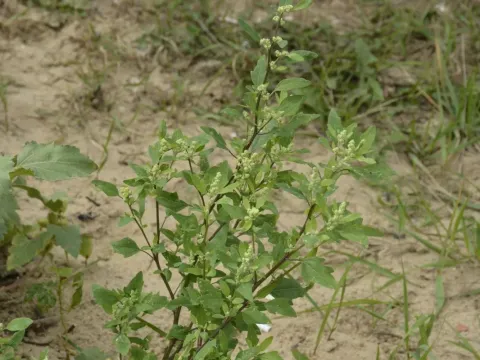
Maple-leaved goosefoot
Chenopodium acerifolium
Maple-leaved goosefoot (Chenopodium acerifolium) is an annual herbaceous plant belonging to the Amaranthaceae family. It is a distinct species known for its specific leaf morphology, which provides its common name, closely related to the well-known common lambsquarters.
What the section contains
Maple-leaved goosefoot
The plant thrives in a wide range of soil types, preferring fertile loams with high nitrogen content. It is a highly adaptable species that performs best in well-drained conditions, demonstrating significant resilience in various agricultural environments.
As a heliophilic plant, it requires full sun exposure to reach its physiological potential and produce high-quality biomass. While it possesses some degree of drought tolerance, consistent irrigation during the peak growing season is essential for maximizing yield.
Standard agronomic practices require a well-prepared seedbed to facilitate germination of the small seeds. Depth control is critical, with planting usually conducted at 1–2 cm, followed by rolling to ensure good seed-to-soil contact.
Regarding its utility, the culture is studied for its potential as a forage crop. It grows rapidly and can provide multiple harvests in a single season, contributing to the diversity of green fodder resources available for livestock production.
The crop is susceptible to several pathogens, with downy mildew being the most significant threat under high humidity conditions. Implementing adequate plant spacing and ensuring good airflow are primary methods to reduce disease pressure in the field.
Pests that typically impact the population include aphids and various leaf-mining insects. Farmers should employ scouting techniques to identify early infestations and apply appropriate biological or chemical controls to preserve leaf integrity.