
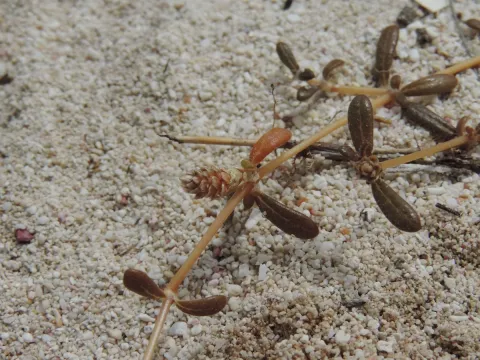
Lithophila
Lithophila
Lithophila represents a genus of perennial herbaceous plants within the Amaranthaceae family. These plants are scientifically noted for their ability to thrive in specialized, often mineral-rich or rocky environments, which informs their unique agronomic requirements.
What the section contains

Lithophila
The sowing process for Lithophila requires careful temperature management. As the seeds are typically small, they need a warm and stable environment, ideally between 22 and 26 degrees Celsius, to trigger germination successfully within a standard timeframe.
Preparation of the substrate is vital; it must be fine-textured to ensure good seed-to-soil contact. Sowing should be shallow, as the seeds require ambient light to stimulate growth, and burying them too deeply can significantly reduce germination rates.
In a controlled agricultural setting, providing adequate spacing is necessary to facilitate proper air circulation. Crowding the plants can lead to higher humidity levels around the foliage, which is often detrimental to this specific type of plant.
Growth progression involves initial establishment followed by rapid biomass accumulation during the long-day period. Farmers must ensure the young seedlings are protected from harsh weather conditions until they reach a robust size capable of sustaining themselves in open field conditions.
Lithophila is a genus that thrives in diverse environments, ranging from rocky slopes to arid coastal zones. To grow it successfully, one must replicate these natural conditions by using high-drainage, sandy, or gravelly soil mixtures that prevent any moisture accumulation.
The plant demonstrates high tolerance to nutrient-poor soils. Excessive fertilization, particularly with nitrogen-rich compounds, is generally discouraged as it promotes overly lush growth, making the plant structurally weak and more susceptible to pathogen attacks.
Moisture management is the cornerstone of Lithophila cultivation. Being naturally adapted to xerophytic conditions, the plant requires only moderate irrigation. The soil should be allowed to dry out significantly between watering sessions to avoid root decay.
Light intensity is another critical factor. Lithophila is a sun-loving plant that performs poorly in shaded areas. Optimal growth is observed when the plants receive at least 6 to 8 hours of direct sunlight, which is necessary for maintaining plant vigor and color.
Soil pH should ideally be maintained at a neutral to slightly alkaline level. This matches the native ecological niche of most species within the genus and ensures the availability of essential micronutrients that the plant needs for healthy metabolic function.
Root rot, primarily caused by fungi such as Fusarium and Phytophthora, is the most common threat to Lithophila populations. These pathogens thrive in waterlogged soil, meaning that improper irrigation or poor drainage is the leading cause of crop failure.
Pests such as spider mites and aphids represent a significant challenge in enclosed growing environments. These pests multiply rapidly in warm, dry conditions, causing leaf discoloration, stunting, and the overall reduction of the plant's aesthetic and economic value.
In some regions, soil-borne insects can damage the root system, creating entry points for secondary infections. Implementing a soil sterilization program or using disease-free growing media is highly recommended for commercial production.
Powdery mildew can become a nuisance during periods of high humidity or poor air movement. This fungal disease creates a white, powdery layer on the surface of the leaves, which hinders photosynthesis and weakens the plant's overall system.
Preventive management includes regular monitoring of plant health, ensuring proper spacing for ventilation, and practicing strict sanitation protocols within the greenhouse or field. Chemical intervention should be used sparingly and only when cultural controls fail.
Harvesting Lithophila depends on the intended end-use of the crop, whether it is for ornamental purposes, botanical extraction, or research-based agricultural trials. The timing must be precise to capture the peak health and vigor of the biomass.
For vegetative material, the optimal harvest time occurs just before the plant enters its full flowering phase. This ensures that the concentration of secondary metabolites, if being studied, remains at its peak while preventing unnecessary energy expenditure.
Tools used for harvesting must be sterilized to prevent the accidental transmission of diseases between plants. Manual harvesting is generally preferred to prevent bruising and to allow for the careful selection of high-quality plant parts.
Post-harvest handling is just as important as the growth phase itself. The material should be kept in a cool, dry area with good ventilation to prevent rotting during transport or processing, as the moisture content of the tissue can be high.
If seeds are the intended target, harvest should occur once the seed heads reach maturity and start to turn brown. This requires monitoring the color change and harvesting just before the natural dispersal of seeds occurs to maximize total yield.