
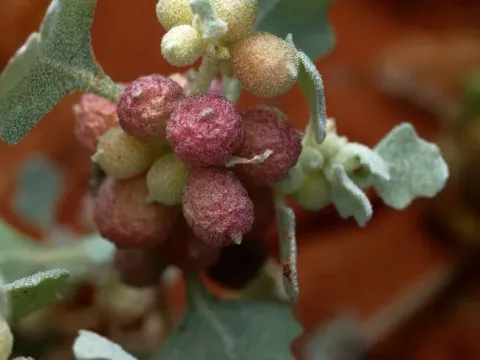
Low Saltbush
Atriplex holocarpa
Low Saltbush is a plant adapted to arid zones; therefore, its sowing times are strictly tied to the onset of the rainy season or periods when soil temperatures become optimal for germination. In natural habitats, seedlings appear after rainfall, which provides the necessary moisture for the topsoil.
What the section contains
Low Saltbush
When cultivating this crop for agricultural purposes, it is recommended to sow in well-warmed soil. The seeds have high germination rates but require minimal moisture during the first weeks of life to establish a developed root system.
The sowing depth must be kept to a minimum, as the small seeds of the saltbush may fail to sprout if planted too deep. Surface sowing followed by light rolling ensures optimal contact with the soil and rapid start of vegetation.
The best time for sowing in hot-climate regions is early spring, which allows the plant to utilize winter moisture reserves. Sowing in the autumn is only feasible if rainfall is predicted, supporting rooting before the onset of severe frost.
The planting density is regulated based on the intended use. When establishing pastures, a denser sowing pattern is recommended, whereas for seed production, the distance between rows should be at least 50-70 centimeters.
Low Saltbush is a typical halophyte belonging to the Amaranthaceae family. It is perfectly adapted to extreme conditions, including high levels of soil salinity, which makes it a valuable asset for the restoration of degraded lands.
The crop prefers light, sandy, or loamy soils with good aeration. The plant is capable of enduring long periods of drought due to its developed deep root system, which reaches moist groundwater horizons.
Climatic requirements include high insolation and resistance to sudden temperature fluctuations. It grows successfully in the deserts and semi-deserts of Australia, where it originates, demonstrating exceptional resilience to wind erosion.
For normal development, the plant requires intense sunlight; therefore, shading in fields is strictly discouraged. High pH levels are not an obstacle, as the saltbush is adapted to alkaline soils.
An important requirement is avoiding waterlogging and stagnant water. Excessive humidity in the root collar zone leads to the development of rot and rapid population decline, so the plots must have good natural drainage.
The yield of Low Saltbush green biomass directly depends on the level of rainfall and the availability of mineral salts in the soil. In favorable years, the crop can form a significant volume of vegetative mass suitable for livestock grazing.
Nutritional value indicators remain stable even during the flowering phase, distinguishing this species from many other forage weeds. The leaves and stems contain a high percentage of protein and minerals necessary for ruminants.
When used as a fodder crop, moderate mowing or grazing is practiced. It is important to avoid overgrazing to allow the plant to regenerate its leaf apparatus using dormant buds in the basal zone.
Maximum productivity is observed on saline soils where other agricultural crops cannot survive. This ability to synthesize biomass under adverse conditions determines its economic significance as a pasture crop.
The seed productivity of the saltbush is very high. A single plant can produce thousands of seeds, which ensures rapid self-regeneration of the population in the field and stability of the agro-ecosystem against external impacts.
The main biological threats to Low Saltbush are specific species of leaf beetles and weevils that can damage young shoots. Mass outbreaks of phytophagous insects in dry years can significantly reduce the yield.
Among fungal diseases, powdery mildew and various types of rust are the most dangerous, manifesting during atypically high humidity for the region. These diseases suppress photosynthetic activity and reduce the quality of green fodder.
Viral infections transmitted by insect vectors can lead to leaf deformation and plant stunting. Prevention consists of maintaining spatial isolation from weed patches that may host vectors.
Improper agronomic practices, such as excessive nitrogen fertilization, provoke the development of root rots. The saltbush does not need intensive mineral nutrition and thrives better on a natural soil background.
To control pest populations, it is recommended to use biological protection methods and adhere to a grazing regime that prevents the accumulation of pathogens in the basal zone through the regular rotation of plant generations.
Harvesting of the green biomass is carried out during the budding phase, before the active ripening of seeds. During this period, the nutrient content in the plant is maximized, and the stems remain soft enough for livestock.
If seeds are required, the harvest is performed after full ripening, when the fruit husks acquire a characteristic shade. It is important to complete threshing before the seeds begin to shatter into the soil.
Mechanized harvesting is possible using grain combines with appropriate settings for the threshing apparatus. Small seeds require careful cleaning of plant debris on air screens.
Post-harvest processing includes drying the seed material in the shade until moisture content reaches no more than 10-12%. This prevents spoilage and self-heating of the seeds during long-term storage.
Storing saltbush seeds is recommended in dry, cool, and well-ventilated rooms. Under such conditions, germination remains high for several seasons, allowing for the creation of reserves for the sowing season.