
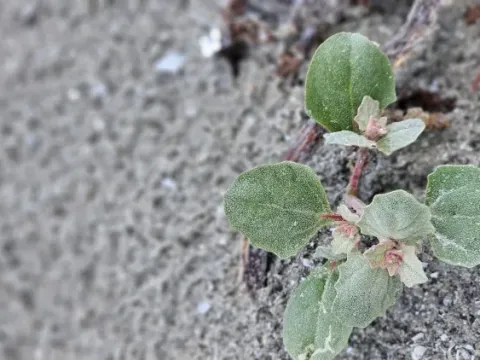
Long-stalked orache
Atriplex longipes
Long-stalked orache is an annual halophytic plant that begins germinating when soil temperatures reach between 8 and 12 degrees Celsius. Early spring is the optimal time for sowing, as it allows the seeds to take advantage of the residual soil moisture essential for rapid emergence.
What the section contains
Long-stalked orache
The crop exhibits high germination vigor, enabling it to establish quickly and outcompete weed species during the initial developmental stages. Farmers are encouraged to use row sowing with spacing between 30 and 45 centimeters to ensure optimal plant density and growth.
Seed planting depth should be maintained between 1 and 2 centimeters, depending on soil composition. Planting too deeply can lead to significant delays in emergence and potentially reduced stands, so ensuring firm contact with moist soil is critical.
The seeding rate must be calculated based on seed viability and target plant density per hectare. Avoiding overcrowding is essential, as excessive density can negatively affect root development and the total accumulation of biomass.
In regions with a long spring season, farmers may opt for phased sowing to extend the vegetative growth period, ensuring a steady supply of fresh green forage for livestock throughout the season.
Belonging to the Amaranthaceae family, this species is a true halophyte, well-adapted to saline soils where traditional crops often fail. It thrives in these challenging environments by effectively managing salt concentrations in its tissues.
The crop prefers locations with full exposure to sunlight throughout the day to maximize photosynthetic efficiency. Insufficient light can result in stunted stem development and reduced overall biomass production, impacting the final quality of the harvest.
Soil requirements for Atriplex longipes are modest; it prefers light sandy or loamy soils, particularly those with high salinity. Its ability to tolerate these conditions makes it a valuable candidate for the reclamation of degraded and marginal agricultural lands.
While moderate moisture is beneficial during the early stages of growth, the mature plant is remarkably drought-tolerant. Excessively wet soil conditions should be avoided, as stagnant water can lead to root rot and other physiological stressors.
Adequate nitrogen availability is important for stimulating vegetative growth, especially when the crop is being utilized for high-protein forage. Balanced mineral nutrition ensures the crop reaches its full potential in both biomass volume and nutrient density.
The yield of green biomass is directly correlated with management practices and seasonal environmental conditions. With proper care, this crop can produce a significant volume of plant material within a relatively short period of time.
Productivity is significantly enhanced by timely cultivation of row spaces, which improves soil aeration and reduces weed competition. Strong, well-developed plants provide high-quality feedstock suitable for ensiling and animal consumption.
Seed productivity remains stable, which facilitates the home-production of high-quality seeds for subsequent seasons. Careful timing during the harvest phase is necessary to prevent natural seed shattering and yield loss in the field.
Harvesting for forage should be conducted before the plant reaches the full reproductive phase to ensure the leaves remain tender and nutrient-rich. This strategy optimizes the digestibility and nutritional value for livestock.
The economic viability of growing long-stalked orache is supported by low input costs and its unique ability to turn unproductive, saline soils into productive assets for modern livestock farming.
Common phytopathological threats include powdery mildew, which can develop under high humidity and poor ventilation. Maintaining optimal plant spacing and ensuring good airflow within the field are the primary methods for disease prevention.
Pests such as aphids can damage young plants by feeding on sap, leading to leaf deformation. Regular field monitoring is essential during the spring months to detect early infestations and apply necessary biological or chemical control measures.
Soil-borne nematodes pose a hidden threat by damaging the root system, thereby limiting the plant's ability to absorb water and nutrients. Crop rotation is the most effective strategy to prevent the buildup of soil pathogens over time.
Weeds are strong competitors for resources during the early life of the crop; therefore, mechanical weeding between rows is a standard and necessary practice. Clean fields significantly improve the vigor and survival rate of the young plants.
Preventing soil waterlogging is critical to maintaining crop health, as excessive moisture promotes the development of fungal and bacterial infections in the lower stems and root zones.
Seed harvesting is performed via direct combining during the full maturity phase when seed moisture levels are sufficiently low. This approach minimizes the need for extensive post-harvest drying and ensures better storage quality.
For forage production, forage harvesters are utilized to quickly cut and collect the biomass for transportation. Performing this task during dry, sunny weather is ideal for achieving the best fermentation results in silos.
Post-harvest processing includes cleaning the seeds of plant debris and adjusting moisture content to between 12 and 14 percent for safe storage. A cool, dry environment protected from pests is required to maintain long-term seed viability.
Green biomass intended for silage is often slightly wilted in the field before collection, which improves fermentation quality and preserves essential nutrients like carotene and crude proteins.
Crop residues left after harvest should be incorporated back into the soil through tilling. This practice returns minerals to the topsoil and helps improve the physical structure and fertility of the land for future planting cycles.