
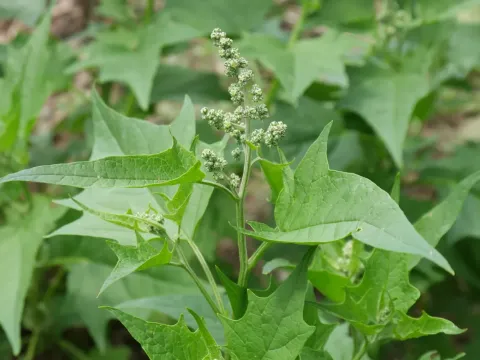
Maple-leaved goosefoot
Chenopodium hybrids
Maple-leaved goosefoot (Chenopodium hybridum) is a member of the Amaranthaceae family. Although often classified as a weed, it possesses unique biological characteristics that are of interest for agricultural and ecological research.
What the section contains
Maple-leaved goosefoot
The optimal sowing time occurs in early spring once soil temperatures reach approximately 8 degrees Celsius. The seeds exhibit high germination rates, allowing the plant to establish itself rapidly in diverse environmental conditions.
Seeds should be sown at a shallow depth of 1–2 centimeters to ensure successful emergence. The plant requires good contact with moist soil during the initial stage to trigger metabolic processes and root development.
Since the species is adapted to natural propagation, sowing density should be carefully managed when grown for specific research or production purposes. Proper spacing helps in regulating biomass production.
Biological resilience is a hallmark of this plant, enabling it to thrive even in challenging conditions. Its ability to grow quickly during the early vegetative phase makes it a highly competitive species.
The plant thrives in nutrient-rich, loamy soils, though it shows significant plasticity and can grow in various soil types. Adequate nitrogen availability is essential for maximizing biomass and seed yield.
Chenopodium hybridum requires warm temperatures and full sun exposure to reach its full growth potential. While it can withstand minor temperature fluctuations, consistent warmth is necessary for optimal development.
Water requirements are moderate; however, consistent moisture during the active growing season leads to healthier plants and higher productivity. Drought stress can limit vertical growth but the plant remains relatively hardy.
Soil pH should ideally be neutral or slightly alkaline. In highly acidic environments, growth might be stunted, necessitating the use of soil amendments like lime to create more favorable conditions for the crop.
Field management should focus on weed control during the early stages and maintaining proper irrigation. Consistent soil aeration through regular cultivation ensures healthy root systems and prevents stagnation.
Common pests include leaf-feeding insects, such as beetles and aphids, which can compromise the photosynthetic efficiency of the plant. Monitoring the field during the vegetative stage is crucial for pest management.
Fungal diseases, such as downy mildew, represent a significant threat, especially during humid and overcast weather. Ensuring good airflow within the crop canopy is the best preventative strategy.
Root rots are frequently associated with poor field drainage. Implementing crop rotation helps break the cycle of soil-borne pathogens and maintains a healthy environment for the cultivation of subsequent crops.
Integrated pest management (IPM) practices, including the use of biological controls or targeted treatments, are recommended if economic thresholds are exceeded. Keeping the fields clean is the first line of defense.
- Damage from leaf-eating insects
- Potential for fungal mildew outbreaks
- Risk of root rot in waterlogged soils
Harvesting is conducted when the seeds reach full physiological maturity, typically indicated by a change in seed color to a darker hue. Timing is critical to prevent yield losses due to natural seed shattering.
Mechanical harvesting requires precision settings on the combine to efficiently capture the seeds while minimizing waste. Post-harvest, the crop should be processed quickly to prevent quality degradation.
The seeds have potential for use as a high-protein ingredient, similar to other members of the goosefoot family. Ongoing studies are exploring their nutritional composition for future food industry applications.
Proper drying is essential for long-term storage; the moisture content of the seeds should be reduced to 12–14 percent to inhibit mold growth and preserve viability. Storage facilities must be dry and well-ventilated.
Effective post-harvest logistics ensure the maintenance of product quality from the field to the facility. This involves cleaning the seeds of debris and ensuring the preservation of essential fatty acids and proteins.