
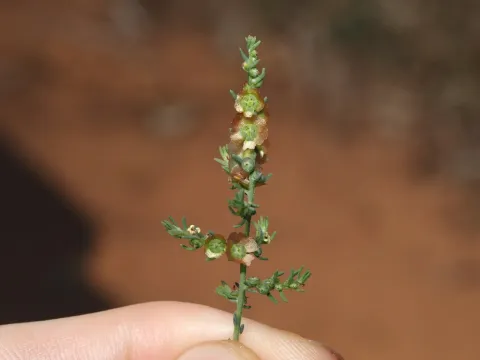
Maireana
Maireana Moq.
Maireana is a genus of perennial subshrubs belonging to the Amaranthaceae family, widely known for their resilience in harsh, arid, and semi-arid environments.
What the section contains

Maireana
Originating primarily from the Australian continent, these plants are perfectly adapted to environments where water scarcity and soil salinity prevent the growth of traditional crops.
The culture thrives in full sun exposure and is highly sensitive to shade, which limits its growth and reduces its overall biomass production significantly.
Soil requirements are relatively modest; the plant prefers well-drained sandy or loamy soils but displays remarkable tolerance to alkaline and saline conditions.
Botanical characteristics include succulent leaves or specialized structures that store moisture, allowing the plant to remain metabolically active during severe drought periods.
Sowing should coincide with the onset of the cool season or predicted rainy periods to ensure adequate moisture for seed germination and root establishment.
Seeds are typically sown at a very shallow depth, as the small size of the seeds provides limited energy for emergence if buried deep within the soil profile.
Broadcast seeding or shallow drilling are common methods used to establish stands, often followed by light harrowing to improve soil-to-seed contact.
Natural regeneration from seed is a key strategy for the plant's persistence, so providing the necessary space between rows is crucial for long-term stand health.
In degraded areas, seeding is often combined with site preparation techniques that catch runoff water, which significantly improves success rates.
The yield of Maireana is best measured by its biomass production per hectare, which provides reliable fodder when other forage sources are unavailable.
Annual dry matter yields are generally modest compared to irrigated crops but offer high stability, which is critical for agricultural risk management in dry zones.
The nutritive value, particularly the protein content, makes it a vital feed supplement for sheep and cattle, helping to maintain livestock condition.
Beyond forage, the plant contributes to land stability by reducing erosion, which adds value by maintaining the long-term productivity of the grazing land.
Efficient management of the grazing pressure ensures that the yield remains consistent over many years, as the plant is a long-lived perennial.
Overgrazing is the most significant threat to the survival of Maireana, as it prevents the plant from setting seeds and depletes its energy reserves.
Pests such as caterpillars and various beetles can cause localized damage, particularly to younger plants that have not yet developed toughened tissues.
Fungal diseases related to root and stem rot may occur if the soil remains waterlogged for extended periods, which is an unnatural condition for this species.
Competition from aggressive invasive weeds during the establishment phase can choke out young Maireana plants, requiring weed control measures.
Environmental factors like extreme salt accumulation or soil crusting can also impede seedling establishment, necessitating careful monitoring of the site.
Harvesting is primarily conducted through controlled grazing cycles, which allow the plants sufficient recovery time between grazing events.
Mechanical harvesting of the foliage for hay is impractical in most cases due to the plant's growth habit and the rugged nature of the landscapes it occupies.
Seed collection is the most common mechanical harvest activity, often performed when the fruits have dried and are ready for dissemination.
Proper grazing management involves rotating livestock between paddocks to ensure that the plants are not grazed down to the woody stems.
Regular monitoring of the pasture condition is essential to determine when the plants are ready for grazing after a period of rest and regrowth.