
Atriplex verrucifera
Atriplex verrucifera
Atriplex verrucifera is a perennial subshrub belonging to the Amaranthaceae family. Known as a true halophyte, this species is highly specialized to thrive in soils with extreme salinity levels, where conventional agricultural crops typically fail to establish.
What the section contains
Atriplex verrucifera
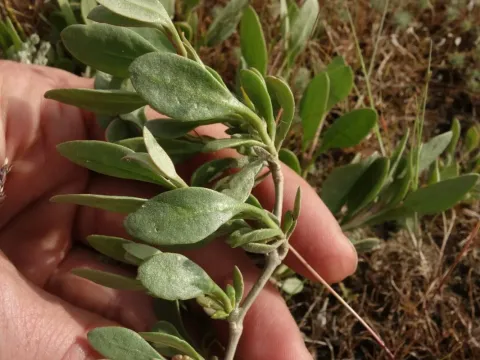
The botanical structure of the plant features succulent, often wart-like leaves that are evolutionarily adapted to sequester salt ions. This mechanism allows the plant to maintain osmotic pressure and continue vital metabolic processes in harsh, saline environments.
Its natural distribution covers saline deserts and coastal regions throughout Eurasia. The plant exhibits high resilience to both high-temperature fluctuations and arid conditions, making it an ideal candidate for vegetation restoration in degraded saline landscapes.
In agricultural practice, Atriplex verrucifera is highly valued as a forage crop for camels and small ruminants. Its ability to regrow after grazing makes it a sustainable source of fodder in regions where traditional forage production is limited by soil salinity.
Successful cultivation requires selecting sites with appropriate salinity profiles. While the plant is drought-tolerant, supplemental irrigation during the initial establishment phase significantly improves plant density and overall biomass accumulation.
The primary threats to Atriplex verrucifera include fungal infections associated with waterlogged, poorly drained soil conditions. Maintaining adequate drainage is essential to prevent root rot and ensure the longevity of the plantings.
Insect pests, including various species of phytophagous beetles, can inflict significant damage on vegetative tissues during peak growth periods. Integrated pest management strategies are recommended to mitigate the impact of these insects on total forage output.
Competition from more aggressive plant species during the early growth stage can hinder the development of the crop. Proper land preparation and initial weed control are critical steps in establishing a healthy population of the shrub.
Extreme winter conditions, particularly periods of severe frost without snow cover, can affect the plant's structural integrity. While the species is hardy, such events can lead to temporary yield reductions due to tissue damage.
Unsustainable grazing practices and overstocking pose a significant risk to the plant's regenerative potential. Implementing rotational grazing plans is necessary to preserve the nutritional value and productivity of the field for long-term usage.