
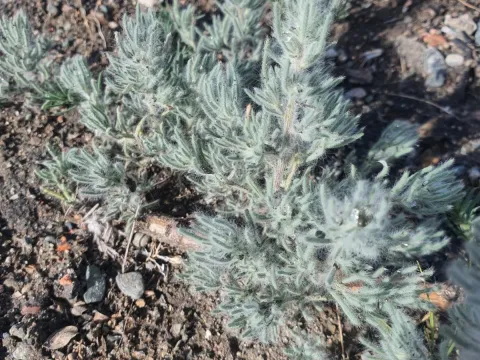
Bassia dasyphylla
Bassia dasyphylla
Bassia dasyphylla is an annual crop that thrives when sown during the early spring, allowing the plants to establish a robust root system before the onset of summer heat.
What the section contains
Bassia dasyphylla
The ideal time for planting is once soil temperatures reach a minimum of 10 to 12 degrees Celsius, ensuring optimal conditions for seed germination and seedling emergence.
Seeds should be sown at a shallow depth of 1 to 2 centimeters, which facilitates rapid sprouting and allows the plant to utilize surface moisture efficiently.
Proper seedbed preparation is essential, including light harrowing to ensure that the small seeds maintain adequate contact with the soil particles for successful water absorption.
In large-scale production, mechanical sowing methods are preferred to maintain consistent inter-row spacing, which prevents overcrowding and competition for nutrients.
As a member of the Amaranthaceae family, Bassia dasyphylla is a recognized halophyte, showing exceptional adaptation to alkaline and saline soil environments.
The plant requires full sun exposure and performs best in open areas where it can receive maximum solar radiation throughout the entire growing season.
Climate requirements include a preference for arid or semi-arid conditions, as high temperatures significantly enhance its metabolic processes and overall growth rates.
Soil quality is secondary to salinity tolerance; however, the plant exhibits superior vigor in well-drained loamy soils that do not suffer from waterlogging.
Drought resistance is one of its primary agronomic assets, making it a viable candidate for sustainable agriculture in regions where water resources are severely limited.
The biomass yield of Bassia dasyphylla is heavily influenced by the availability of soil moisture and the intensity of soil salinity during the critical vegetative phases.
In well-managed fields, the crop can produce a significant amount of forage material, offering a high-protein resource for livestock in otherwise barren landscapes.
Harvest timing is crucial for maintaining nutritional quality, as delaying the harvest can lead to fiber accumulation and reduced palatability of the forage.
Seed production requires careful monitoring, particularly during the late maturation stage, as the plant is susceptible to natural seed shattering if harvested too late.
Overall, the yield potential is most significant in saline-affected areas where traditional cereal or legume crops would fail to establish, providing a productive use of land.
Weed competition represents the most significant threat during the seedling stage, as the initial growth rate of Bassia dasyphylla is relatively slow compared to common weeds.
While the plant is highly resistant to most environmental stressors, it can occasionally suffer from root rot if stagnant water conditions occur due to poor drainage.
Insect pests such as soil-dwelling beetles and certain caterpillar species can damage the growing tips, potentially stunting the development of young plants.
Fungal diseases are rarely an issue in the arid habitats typical for this species, but humidity-driven infections may appear in cooler, excessively wet climate scenarios.
Effective pest management should prioritize cultural practices, such as proper crop rotation, to prevent the buildup of soil-borne pathogens and pests in the field.