
Bassia anisacanthoides
Bassia anisacanthoides
Description
Growing requirements
Bassia anisacanthoides belongs to the Amaranthaceae family, known for its resilience in harsh environments. As an annual herbaceous plant, it has evolved to thrive in arid and semi-arid regions where water availability is a limiting factor for most crops.
The species exhibits strong xerophytic traits, including a deep and extensive root system. This allows the plant to access moisture from subsurface layers, maintaining biological functions even during prolonged droughts typical of its native habitat.
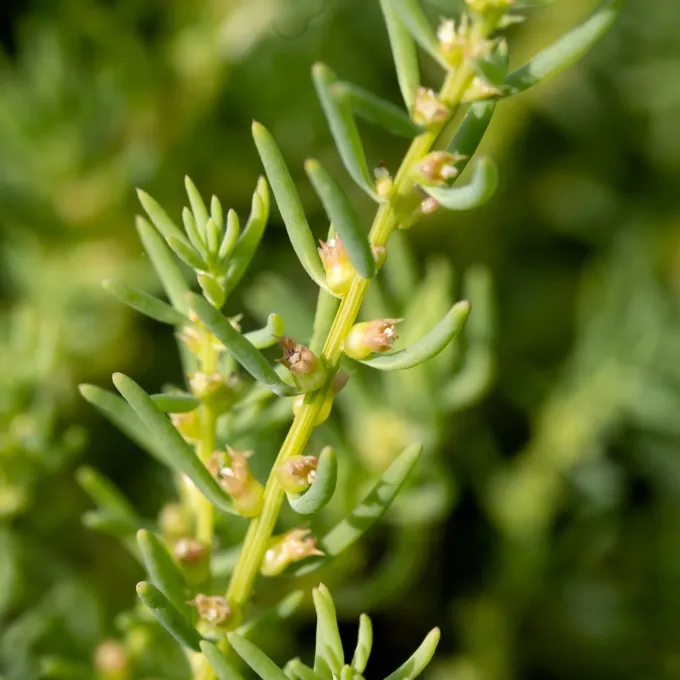
Botanic characteristics feature a highly branched structure with alternate, narrow leaves. The entire surface is often covered in small trichomes, which serve as a protective layer to reduce transpiration rates under intense solar radiation.
Regarding soil requirements, the plant prefers well-drained substrates and is highly tolerant to salinity. It occupies niches where high salt concentration in the soil solution prevents the growth of more sensitive agricultural species, acting as a natural soil indicator.
Agricultural management for this species is focused on preserving the biodiversity of grazing lands. Unlike intensive crops, Bassia species are often managed through controlled grazing or as part of natural vegetation restoration programs in degraded lands.
Main diseases and pests
Fungal diseases such as rusts and mildews pose a significant threat, especially during humid seasons. These pathogens can rapidly spread across dense populations, affecting both the leaves and the overall vigor of the plant during the growing season.
Insect pests, including aphids and various beetle species, often target the tender parts of the plant. Significant infestation can lead to stunted growth and reduced biomass, which is particularly detrimental if the plant is managed for forage purposes.
Root rot pathogens become a primary concern in areas with poor drainage or stagnant water after heavy rains. These diseases can cause sudden wilting and death, leading to patchy distribution within the cultivated area or natural habitat.
Weed competition from more aggressive annual grasses can displace the population if not managed correctly. While the plant is hardy, it struggles to compete for resources in the seedling stage when light and nutrient access are limited by faster-growing species.
Overgrazing by livestock represents an indirect but persistent threat. Constant pressure from herbivores prevents the plant from completing its reproductive cycle and producing sufficient seeds to ensure the sustainability of the population for the following year.