
Bassia eriophora
Bassia eriophora
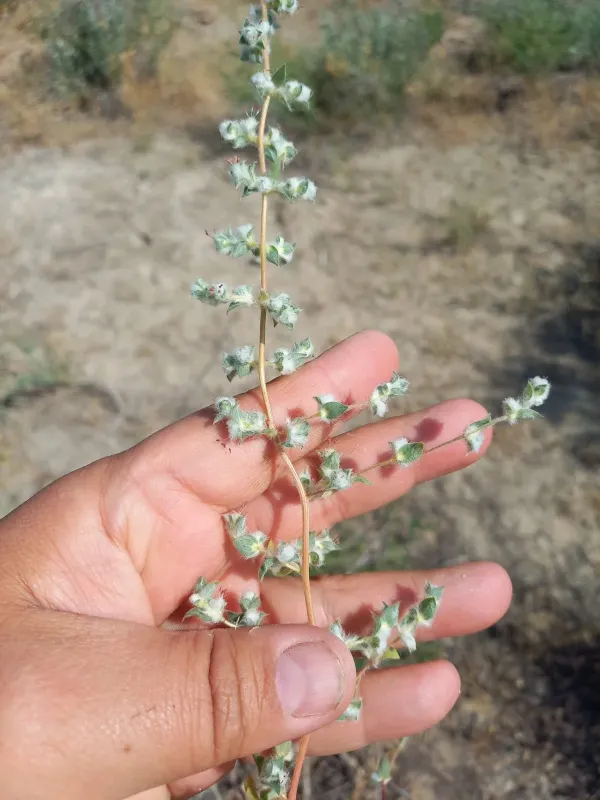
Description
Sowing dates
Sowing of Bassia eriophora should be carried out in early spring, as soon as the soil reaches a temperature of 8–10°C. An April window is generally considered optimal to leverage spring moisture reserves for initial establishment.
Seeds are sown in rows spaced 45–60 cm apart to provide sufficient space for growth. A shallow sowing depth of 1–2 cm is necessary, as the seeds are small and require close contact with moist soil layers to germinate successfully.
Compacting the soil after sowing is highly recommended to improve capillary moisture transport to the seeds. Seedlings typically emerge within 10–14 days, provided that soil moisture and temperature conditions are within the favorable range.
The crop exhibits a slow initial growth rate, which requires dedicated weed control measures during the early vegetative phase. Managing inter-row spaces is crucial to prevent competition from weeds that could suppress the young plants.
For seed production plots, a lower sowing density is preferred to encourage branching and increase the seed yield per plant. Adequate spacing ensures that each plant has enough nutrients and sunlight to reach full maturity.
Growing requirements
Bassia eriophora belongs to the Amaranthaceae family and is known for its remarkable adaptation to harsh, semi-arid environments. It is a halophytic plant, capable of thriving in soil conditions that limit the growth of standard forage species.
The plant is highly drought-resistant and capable of utilizing minimal rainfall efficiently due to a deep taproot system. It can survive intense heat waves that would normally cause severe wilting in other agricultural crops.
Full sun exposure is a mandatory requirement for this species. It does not tolerate shading, as lack of sunlight drastically reduces photosynthetic efficiency and leads to stunted plant growth.
In terms of soil preference, it thrives in sandy loams or light soils with excellent drainage. While it is tolerant of high soil salinity, it is sensitive to waterlogging and should not be planted on poorly drained ground.
The temperature requirements are broad, with the plant showing optimal performance in high-temperature settings. It remains productive throughout the summer heat and is well-suited for regions characterized by desert-like climates.
Main diseases and pests
Fungal diseases are the primary threat, specifically root rots occurring during periods of excess soil moisture. Excessive humidity in the root zone can rapidly lead to crop decline and plant death.
Insects, such as weevils and aphids, may target the young succulent shoots. These pests can significantly reduce the biomass yield if infestation levels are not managed via early detection and intervention.
Weeds are the most significant competition during the establishment phase. If the field is not kept clean, the aggressive nature of certain weeds can easily overtake the slow-growing Bassia seedlings.
Wireworms residing in the soil can cause damage to the root system, weakening the plant and causing uneven stand density across the field. Pre-sowing soil testing for pest pressure is recommended.
Management strategies emphasize rotation and avoiding site conditions that favor moisture accumulation. Maintaining a clean field perimeter also helps in reducing the overall pest and pathogen pressure on the crop.
Harvesting
Harvesting for forage should take place during the mass flowering stage, which marks the period of peak nutritional value. Harvesting at this time ensures the best quality biomass for livestock consumption.
Standard forage harvesters can be used for cutting the crop. Due to the plant's structural characteristics, using shredding attachments is beneficial for effective loading and silage compaction.
When harvesting for seeds, timing is critical to prevent seed shattering. Operations should commence when the plant tissues begin to change color, indicating the onset of physiological maturity.
Post-harvest seed processing requires drying and cleaning to remove hairs and auxiliary structures. Specialized cleaning equipment is often needed to achieve the required purity for future planting cycles.
Harvest residues can be utilized as a soil amendment, contributing organic matter back into the system. This practice is particularly beneficial for improving soil health in arid regions with low inherent fertility.