
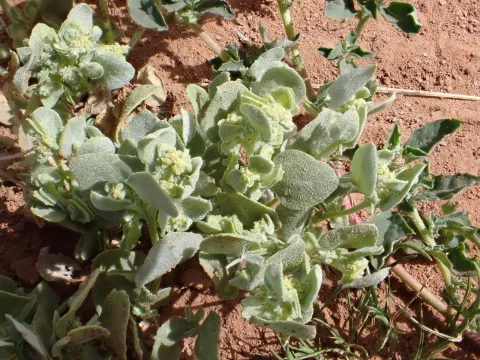
Atriplex dimorphostegia
Atriplex dimorphostegia
Atriplex dimorphostegia is an annual herbaceous plant belonging to the Amaranthaceae family. Its life cycle is perfectly adapted to the harsh conditions of desert and semi-desert environments, relying on spring rains for rapid germination.
What the section contains
Atriplex dimorphostegia
Sowing time is strictly dictated by soil temperature. The optimal window occurs when the top layer of soil warms to at least 10–12 degrees Celsius, which promotes vigorous emergence and strong early development.
The planting method generally involves row sowing. Due to the high germination rate, spacing between seeds and rows must be calculated carefully to prevent overcrowding, which could hinder the development of the foliage.
Minimal soil preparation is required; however, the seedbed must be level. Since the seeds are small, they should be sown at a depth of no more than 1–2 centimeters to ensure they have enough energy to reach the surface.
In arid farming regions, winter sowing is sometimes practiced to utilize winter moisture, allowing the plants to establish a deep root system before the onset of the severe summer heat.
This species is a true halophyte, meaning it is biologically programmed to thrive in saline soils. It plays an essential role in reclaiming marginal lands by utilizing minerals and salts that would be toxic to conventional crops.
Atriplex dimorphostegia exhibits extreme drought tolerance. Its physiological structure allows it to maintain cell turgor and metabolic processes even under conditions of severe water scarcity and high ambient temperatures.
The plant is highly heliophilic and requires full exposure to direct sunlight for optimal growth. Shaded environments drastically reduce the plant's photosynthetic capacity and total biomass yield.
Well-drained sandy or loamy soils are ideal for this species. It does not tolerate waterlogging, as the stagnant water in the root zone can trigger decay and severely impact the plant's overall health and productivity.
Temperature range is broad, as the species is adapted to significant diurnal temperature fluctuations. It remains productive even when daily temperatures climb well above 30 degrees Celsius.
The biomass yield of Atriplex dimorphostegia remains remarkably stable, even in seasons with limited precipitation. In many arid regions, it serves as a critical source of forage for livestock.
Nutritionally, the plant is rich in protein and essential minerals. When harvested at the right time, it provides a valuable supplement to traditional hay, especially in areas where other forage options are unavailable.
Seed production is another key economic aspect. The plant's dimorphic seeds ensure successful reproduction across diverse environmental conditions, which contributes to the reliability of future crop cycles.
Production costs are notably low due to the plant's resilience. It requires minimal synthetic inputs like fertilizers or herbicides, as its rapid early growth often outcompetes most common weeds.
Harvesting at the peak of the vegetative phase, before the onset of maturity and hardening of the stems, is crucial to maintain the highest feed quality and palatability for livestock.
Fungal diseases are the primary threat, particularly in high-humidity periods or following persistent fogs. Proper site selection to ensure good ventilation is the most effective preventative measure.
Insect pests, specifically aphids, are common threats that feed on the succulent young leaves. Infestations can weaken the plant and reduce total biomass, requiring periodic monitoring throughout the growing season.
Root rot is typically associated with over-irrigation or soil compaction. Preventing water accumulation around the base of the plant is essential to maintain a healthy root system throughout the plant's life cycle.
Caterpillars of various moth species can also cause significant leaf damage. In large-scale operations, biological control agents are often preferred over chemical applications to keep pest populations in check.
Strict crop rotation practices should be implemented to prevent the buildup of soil-borne pathogens. A minimum break of four years is recommended before replanting Atriplex dimorphostegia in the same field.
Mechanical harvesting is standard for large-scale production. Mowers should be adjusted to cut the biomass just before seed maturity to capture the maximum volume of high-quality feed.
Seed harvesting requires careful timing; the process should be initiated when the fruit husks begin to change color but before natural dehiscence leads to excessive seed loss in the field.
After mowing, the forage is often left to dry in the field for a short period to reduce moisture content. This solar drying process is highly efficient in the arid climates where this crop is grown.
Proper storage is essential to prevent degradation. Dried biomass should be baled and kept in a dry, well-ventilated area to maintain its quality and nutritional value over the winter months.
Final seed processing involves drying to a moisture level below 12 percent. Stored under cool and dark conditions, the seeds retain excellent germination potential for several years.