
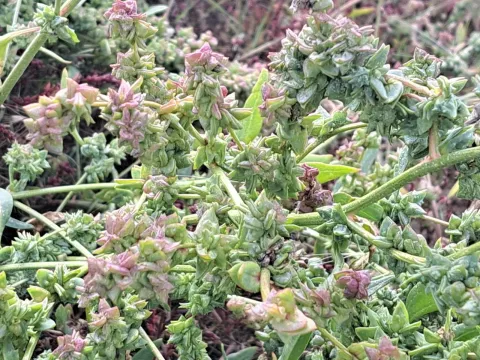
Atriplex dioica
Atriplex dioica
Atriplex dioica, belonging to the Amaranthaceae family, is a promising crop for temperate climate regions. Sowing should be carried out in early spring, as soon as the soil warms up to 8–10 degrees Celsius.
What the section contains
Atriplex dioica
The optimal planting depth for seeds is 1–2 centimeters, as the seeds have high germination energy but are sensitive to excessive soil surface density.
To ensure uniform emergence, it is essential to prepare the field thoroughly, including harrowing to retain soil moisture and leveling the surface of the plot.
The seeding rate depends on the purpose of cultivation, but average values range from 8 to 12 kilograms per hectare using standard drill sowing methods.
The crop demonstrates fast growth dynamics during the initial period, allowing it to compete effectively with weeds within 3 weeks after seedling emergence.
This species of saltbush has moderate soil fertility requirements, preferring light loams or chernozems with good aeration and a neutral pH level.
The plant exhibits high drought tolerance; however, to achieve maximum vegetative mass during the active growth phase, regular rainfall or drip irrigation is necessary.
An important factor for development is lighting: Atriplex dioica is light-loving and does not tolerate overcrowded stands, which lead to stem lodging and decreased raw material quality.
The crop utilizes nitrogen fertilizers efficiently, but excessive organic application can cause nitrate accumulation, so dosages must be strictly controlled.
Adaptability to different climatic zones allows it to be grown in both steppe and forest-steppe regions, provided that crop rotation with cereals is maintained.
The main threats to the stands are fungal infections, such as powdery mildew, which develop actively in conditions of high air humidity and poor wind circulation.
Among pests, the greatest damage to crops is caused by beet weevils and various species of aphids that suck sap from young leaves and growth points during the first half of vegetation.
For insect control, it is recommended to use biological insecticides, as the crop is often used as a fodder or food component requiring high environmental standards.
Disease prevention consists of maintaining spatial isolation from other members of the Amaranthaceae family, which may harbor pathogen reservoirs.
Regular field inspections for pest organisms allow for the localization of infection outbreaks and prevent the large-scale use of chemical protection agents.
Harvesting of Atriplex dioica is carried out during the full seed maturity phase or during the mass formation of vegetative mass if the crop is grown for silage or green fodder.
When harvesting seeds, it is important to prevent over-ripening, as seeds have a tendency to shatter during strong gusts of wind or excessive fruit dryness before harvest.
Mechanical harvesting requires setting the combine harvesters to lower threshing drum speeds to prevent mechanical damage to the seeds.
After harvesting, the seeds must undergo a drying process under natural conditions or on threshing floors until reaching 12–14 percent moisture to prevent spoilage during storage.
Green mass should be processed immediately after mowing to preserve nutritional value and prevent the development of mold fungi in the harvested material.