
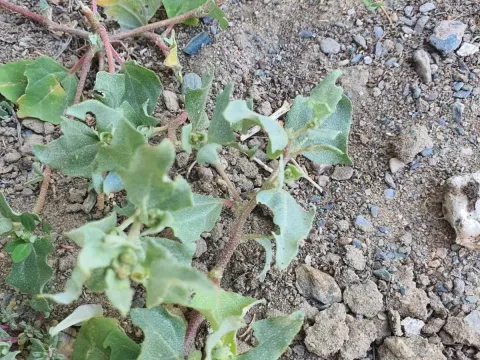
Siberian orach
Atriplex sibirica
Siberian orach (Atriplex sibirica) is a hardy annual herbaceous plant belonging to the Amaranthaceae family. It is recognized for its ability to thrive in challenging, saline environments where conventional crops often fail to establish.
What the section contains
Siberian orach
The native distribution of this species spans across Siberia, Mongolia, and surrounding Asian territories. As a drought-tolerant halophyte, it is naturally adapted to arid conditions and high soil salinity, often colonizing degraded lands.
Botanically, the plant features a branched habit with triangular or rhombic leaves coated in fine, mealy hairs. This structural adaptation effectively reduces transpirational water loss, allowing the plant to remain active during dry spells.
Regarding soil requirements, Siberian orach prefers loose, well-drained soils, though it remains notably indifferent to nutrient deficiency. It requires full sunlight to achieve maximum vegetative growth and is highly resistant to late-spring frost events.
In agricultural practice, its utility is observed in arid farming as a supplemental forage crop or soil stabilizer. Its deep root system facilitates soil aeration, while its high salt tolerance makes it a candidate for reclaiming saline agricultural plots.
Pathogenic threats to Siberian orach primarily include fungal infections, such as powdery mildew, which flourish during periods of high humidity. These infections can drastically reduce the forage quality of the leaves if not managed early.
Common insect pests include flea beetles, which can cause significant defoliation during the early stages of plant development. These pests are particularly aggressive in dry, warm climates where the growth of young plants is slowed.
Aphids are another frequent pest, colonizing the terminal shoots and extracting sap. This damage not only weakens the plant but also encourages the development of sooty mold, further hindering the physiological health of the crop.
Preventive pest management involves crop rotation and the maintenance of optimal soil fertility to ensure vigorous plant growth. Robust plants are significantly more capable of resisting infestations and fungal colonization.
Should infestation levels reach economic thresholds, integrated pest management practices are recommended. This includes the selective use of contact insecticides and the removal of heavily infested plant debris to reduce the local pest population.