
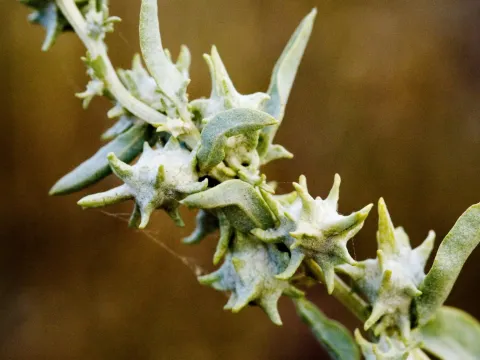
Spinyfruit saltbush
Atriplex acanthocarpa
Sowing of Atriplex acanthocarpa is usually conducted in the spring season when soil temperatures reach 10–12°C. Due to the hard seed coat, pre-sowing treatments such as scarification are often necessary to ensure a higher germination rate.
What the section contains
Spinyfruit saltbush
The optimal planting depth is approximately 1 to 2 centimeters. Planting too deep can cause weak seedling emergence or prevent the seeds from establishing themselves effectively in the field.
The seeding rate varies depending on the intended use of the crop, with a standard range of 8–10 kg per hectare. Proper spacing allows the plant to tiller and increase its vegetative biomass production.
Ensuring good seed-to-soil contact is critical for successful germination. It is recommended to perform field rolling immediately after sowing to maintain soil moisture and ensure uniform emergence of the crop.
In arid regions, sowing is often combined with irrigation or timed to follow rainfall patterns. This ensures that the seeds have sufficient moisture to overcome the initial stages of establishment in dry environments.
Spinyfruit saltbush belongs to the Amaranthaceae family and is a resilient halophyte capable of growing on saline soils. It demonstrates significant phenotypic plasticity to harsh environmental conditions.
This crop has low soil fertility requirements and performs well on sandy and alkaline soils. The ideal pH range for the plant is between 7.0 and 8.5, where it maintains healthy metabolic functions.
The species is highly drought-tolerant, featuring a deep root system that accesses moisture in deeper soil layers. This characteristic makes it an excellent candidate for land reclamation and soil stabilization.
It is a sun-loving plant that does not tolerate shading well. Adequate light exposure is essential for maintaining a high photosynthetic rate and achieving optimal biomass accumulation throughout the season.
Temperature optimization for growth lies between 20°C and 30°C. The plant is well-adapted to the extreme diurnal temperature fluctuations typically found in the dry environments where it naturally occurs.
The biomass yield of Atriplex acanthocarpa is heavily dependent on water availability and soil salinity levels. Under favorable conditions, farmers can expect a yield of 15–25 tons of green forage per hectare.
The nutritional profile of the plant includes significant levels of protein and minerals, making it a valuable feed supplement for livestock in drought-prone areas where traditional forage is scarce.
Foraging utility is maximized by harvesting before the stems become overly lignified. Timely harvesting ensures that the nutritional density remains within acceptable limits for animal consumption.
The plant exhibits vigorous regrowth potential after cutting, allowing for multiple harvests per growing season provided that irrigation or soil moisture levels remain adequate for plant recovery.
Seed production is another viable economic output of this crop, which can be used in the feed industry. Yields of seeds can reach 0.8–1.5 tons per hectare when managed with good agronomic practices.
Leaf-eating insects represent the primary pest threat to young seedlings. Effective monitoring during the early stages of growth is necessary to prevent significant damage to the stand density.
Fungal diseases, such as powdery mildew, can occur in environments with high humidity or poor air circulation. Selecting fields with good natural drainage and airflow is a key preventative measure.
Root rot issues are typically associated with waterlogged conditions. Preventing water stagnation through proper land management and drainage is essential to protect the long-term health of the crop.
Crop rotation should be strictly implemented to minimize the buildup of host-specific pathogens in the soil. Avoiding the cultivation of Amaranthaceae family members in immediate succession is a best practice.
Chemical intervention should be considered a last resort, strictly adhering to economic threshold levels and local safety regulations. Biological control methods are increasingly favored for managing pest populations.
Harvesting for green biomass should be performed during the budding or early flowering stage. This timing captures the peak nutritional value of the plant before energy is diverted to seed development.
Standard mowing equipment should be set to a cutting height of 10–15 centimeters. This height protects the base of the plant, enabling quick recovery and the possibility of a subsequent cutting.
Post-harvest wilting in the field is recommended to reduce moisture content. This stabilization step improves the shelf life of the forage and prevents spoilage during the baling and storage processes.
When harvesting for seeds, farmers must wait for full maturity to avoid shattering losses. A two-stage harvesting process is often used, involving cutting and drying in windrows before mechanical threshing.
Once threshed, the seeds must be cleaned of debris and dried to a standard moisture content to ensure long-term stability and to prevent heating or fungal growth in storage bins.