
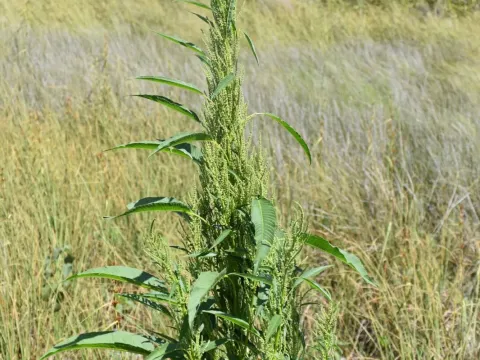
Southern amaranth
Amaranthus australis
Southern amaranth is a warm-season crop, therefore sowing should only be performed when soil temperatures at a depth of 5-10 cm reach 12-15 degrees Celsius.
What the section contains
Southern amaranth
The optimal planting window is in the second half of May, ensuring that the risk of late spring frosts, which can be lethal to seedlings, has passed.
Seed drills are used to plant the crop with row spacing ranging from 45 to 70 centimeters, allowing sufficient space for individual plant development.
Given the tiny size of amaranth seeds, the planting depth must be kept shallow, specifically around 1.5-2 centimeters, for successful emergence.
In regions with shorter growing seasons, starting the plants in a nursery and transplanting them later is a viable strategy for higher productivity.
Belonging to the Amaranthaceae family, this plant is highly adaptive to various environments but requires full sun exposure throughout its life cycle.
Southern amaranth is known for its excellent drought tolerance, making it a suitable candidate for semi-arid agricultural regions with scarce rainfall.
The crop performs best on loose, well-aerated soils such as chernozems or loams, which allow its taproot system to penetrate deep into the substrate.
Proper moisture management is critical during the first month of growth, as the plant establishes its root system and becomes more resilient to environmental stress.
Optimal development occurs in temperatures between 20 and 30 degrees Celsius, with long daylight hours being essential for vigorous vegetative growth.
The biomass yield potential of Southern amaranth is impressive, often reaching 500-800 centners per hectare under optimal fertilization and irrigation.
The grain yield is highly dependent on effective pollination and timing, typically producing 20-30 centners per hectare in commercial cultivation setups.
Nutritional value remains a key benefit of this crop, as it provides a high-protein source for livestock feed and valuable flour for food industries.
The peak biomass accumulation happens at the start of the flowering stage, marking the ideal time for harvesting the plant for green forage or silage.
Sustainable agricultural practices can maintain long-term soil health while delivering consistent yields of this robust and adaptable plant species.
Seedlings are susceptible to insect pests like weevils and aphids, which can cause significant damage if left untreated during the early development stage.
Fungal issues, particularly root rot and powdery mildew, may emerge in fields with poor drainage or in climates with excessive relative humidity levels.
Weed control is vital during the initial phases of cultivation, as the plant grows relatively slowly before reaching its rapid maturation phase.
Integrated pest management strategies, including crop rotation, are essential to minimize the risk of soil-borne diseases in amaranth fields.
Regular field scouting is necessary to identify and treat localized outbreaks of diseases before they spread across the entire planting area.
Harvesting for green forage should occur before the stems become overly fibrous, ensuring optimal digestibility and nutrient density for livestock.
For seed production, harvesting must be timed accurately to avoid excessive seed shattering, a common occurrence when the plant is left in the field too long.
Post-harvest processing requires immediate drying and cleaning to remove moisture and debris, which prevents spoilage and mold growth during storage.
The moisture content of the harvested seeds should ideally be reduced to below 14 percent to ensure long-term shelf stability in storage facilities.
Using appropriately adjusted combine harvesters can effectively collect seeds while minimizing losses caused by the small size and lightness of amaranth grains.