
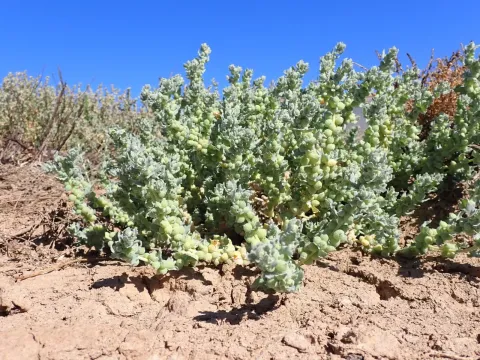
Spongy saltbush
Atriplex spongiosa
Spongy saltbush (Atriplex spongiosa) is a member of the Amaranthaceae family. It is an annual herbaceous plant known for its remarkable ability to colonize extremely arid and saline environments.
What the section contains
Spongy saltbush
The plant is classified as a halophyte, possessing specialized mechanisms to tolerate high salt concentrations in the soil. It accumulates salt within its tissues, which aids in maintaining cellular osmotic pressure.
Botanically, it is recognized by its unique spongy fruit structures. These structures are an adaptation to drought, protecting the seeds and providing a favorable microenvironment for germination when moisture is available.
The species thrives in warm climates with high solar radiation. It requires well-drained soils and is specifically adapted to the harsh conditions of inland Australia, where moisture levels are consistently low.
In agricultural and environmental contexts, it is highly valued for its role in soil stabilization, helping to prevent erosion and reclaiming salt-affected agricultural land.
The spongy saltbush exhibits strong natural defenses against various pests due to its high salinity levels. Most generalist herbivores avoid the plant because of the mineral concentration in its foliage.
The primary threats to young populations are associated with excessive soil moisture. Overwatering can lead to poor aeration, resulting in fungal infections that target the root systems.
Insect pressure is generally low, although some specific desert insects may feed on the plant during periods of rapid growth when the salt content in new tissues is temporarily lower.
Competition from invasive fast-growing weeds during the initial seedling stage can suppress the growth of the saltbush if not properly managed through spacing.
To ensure healthy development, agricultural management should focus on maintaining natural soil characteristics and preventing the introduction of competing vegetation.