
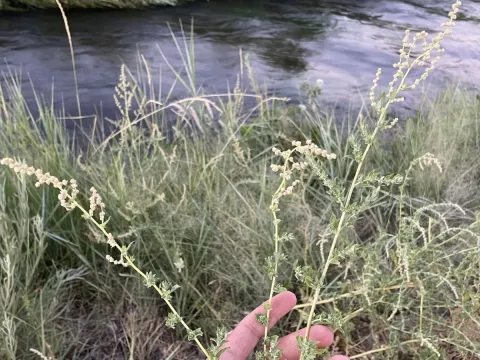
Serene Saltbush
Atriplex serenana
Serene Saltbush (Atriplex serenana) belongs to the Amaranthaceae family. It is an annual herbaceous plant primarily recognized for its persistence in harsh environmental conditions rather than as a commercial crop.
What the section contains
Serene Saltbush
This species is highly adapted to saline soils and arid environments, exhibiting extreme tolerance to drought and poor soil quality.
It typically occupies open, disturbed, or arid areas where it can outcompete native vegetation due to its fast growth rate and efficient water usage.
The plant thrives in regions with intense sunlight and is capable of enduring significant temperature fluctuations throughout the growing season.
For agricultural management, it is crucial to recognize that its seeds can remain viable in the soil for several years, requiring consistent multi-year intervention.
Natural threats to the population include various leaf beetles and weevils that feed on the foliage, which can suppress the plant's vegetative development.
Fungal diseases such as powdery mildew can affect the plant during humid periods, potentially limiting its competitive ability in certain habitats.
Serene Saltbush may serve as a host for nematodes that could pose secondary risks to neighboring crops, necessitating strict field sanitation.
Effective control measures involve the use of selective herbicides and regular mechanical tillage to prevent the plant from reaching the flowering stage.
Proper field scouting during the early spring is essential to identify and eradicate young plants before they establish deep root systems.