
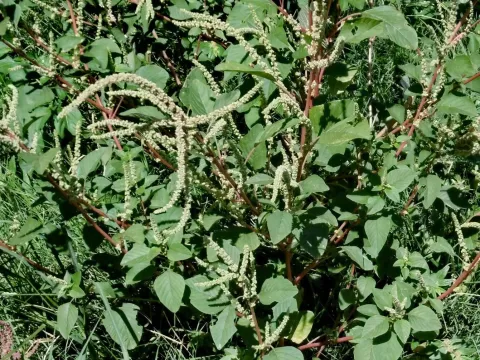
Spiny amaranth
Amaranthus acutilobus
Sowing Amaranthus acutilobus requires well-warmed soil, as the crop is sensitive to cold, with germination optimal at temperatures above +15°C.
What the section contains
Spiny amaranth
The planting period typically begins in late spring, ensuring that all risks of frost have passed to protect the tender seedlings.
For optimal results, seeds are sown in wide rows, allowing sufficient space for mechanical weeding and proper development of each plant.
Because the seeds are very small, they should be placed shallowly, no deeper than 1–2 cm, to ensure they do not exhaust their energy before emerging.
Firming the soil after planting is a critical step to ensure adequate moisture contact, which significantly improves the overall stand uniformity.
As a member of the Amaranthaceae family, this crop thrives in sunny locations and requires high levels of solar radiation for maximum biomass production.
The plant is highly tolerant of heat but demands consistent moisture during the initial stages to establish a strong, deep root system.
It adapts well to various soil textures, from loamy to sandy, provided the soil has good drainage to prevent waterlogging, which the roots cannot tolerate.
Proper weed management is essential during the early growth stages, as the plant grows slowly until it gains enough height to shade out competitors.
Soil fertility management, particularly nitrogen application, plays a vital role in stimulating the rapid growth of stems and leaf mass.
In optimal growing conditions, Amaranthus acutilobus can produce a significant biomass yield, making it an excellent candidate for forage production.
Grain yields vary depending on the plant population density, typically ranging from 1.5 to 3.0 tonnes per hectare under well-managed irrigation.
The productivity of the crop is highly influenced by the duration of the growing season and the absence of extreme environmental stressors.
Maximizing yield requires monitoring the development of seed heads, as irregular maturation can lead to substantial losses if harvesting is mistimed.
Proper plant nutrition and spacing ensure that resources are allocated efficiently toward the production of high-quality, nutrient-dense grains.
The crop is susceptible to several pests, including the amaranth weevil and various lepidopteran larvae that target the foliage during the summer.
Root rot caused by soil-borne fungi can become a problem if fields remain waterlogged for extended periods during the early vegetative stage.
Fungal diseases like Phoma leaf spot can affect the overall health of the plant, potentially leading to a decrease in forage or grain quality.
Integrated Pest Management (IPM) practices, such as crop rotation and the use of resistant varieties, are recommended to maintain field health.
Timely intervention with biological or chemical control agents is necessary if pest populations exceed established economic injury levels.
Forage harvesting should be scheduled between the initiation of the panicle development and the peak flowering stage to maximize nutritional density.
Grain harvest occurs when the seeds achieve full maturity, typically identified by the darkening of the seed heads and reduced moisture content.
Post-harvest processing is critical, as seeds must be dried to 12% moisture or less to prevent spoilage and potential loss of germination quality.
Efficient harvesting involves using combine harvesters calibrated specifically for small seeds to reduce waste during the threshing process.
Crop residue management is beneficial, as incorporating the remaining plant biomass back into the field helps replenish essential soil organic matter.