
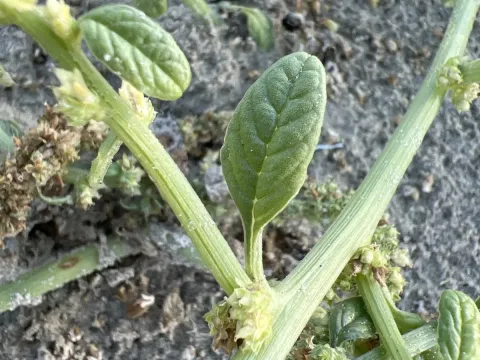
Gregg's Amaranth
Amaranthus greggii
Gregg's Amaranth is a rare member of the Amaranthaceae family that grows primarily in arid regions of North America. In cultivation, sowing dates are determined by the soil reaching a temperature of at least 15–18 degrees Celsius, as the seeds are heat-loving.
What the section contains
Gregg's Amaranth
Optimal seed germination requires stable moisture in the topsoil during the first two weeks after sowing. The best time for establishing plantations in temperate climates is late May or early June, when the risk of late frosts is eliminated.
The sowing technology involves using a wide-row method with spacing of 45 to 70 centimeters, providing the plant with enough area for intensive vegetative mass development. Overcrowding leads to reduced productivity and poor quality of the marketable seeds.
The seeding depth should not exceed 1–2 centimeters, considering the small size of the seeds and low nutrient reserves in the embryo. If sown too deep, seedlings may fail to reach the surface, leading to significant stand density losses.
Using precision seed drills minimizes seed consumption, which for row sowing ranges from 0.8 to 1.5 kilograms per hectare depending on soil preparation and seed purity.
The crop is characterized by high drought tolerance and the ability to adapt to poor, sandy, or rocky soils, which is typical for its natural habitat. However, obtaining high biomass requires moderately fertile, well-aerated loamy soils.
The plant is photophilous and tolerates shading very poorly; therefore, when planning planting sites, one should avoid areas near high trees or buildings that create prolonged shade. A lack of solar radiation leads to stem elongation and reduced content of biologically active substances.
Soil acidity should be within the neutral range, as development of the root system slows down significantly in highly acidic soils. Liming or applying dolomite flour on acidic plots is a mandatory agricultural measure.
Although the species is tolerant to moisture deficits, it is responsive to irrigation during the stem elongation and budding phases. Excessive soil moisture, especially during the seed germination period, can trigger root rot and the death of young seedlings.
In regions with cold climates, successful cultivation is only possible using early-maturing varieties or by starting with transplants, as the growing season requires an active temperature sum of over 2000 degrees.
The yield of Gregg's Amaranth depends directly on nitrogen supply in the first half of the vegetation period and sunlight availability. When proper agricultural practices are followed, the crop can form a significant amount of above-ground biomass, used as high-quality green fodder.
On average, production fields can yield 30 to 50 tons of green mass per hectare, provided there is sufficient moisture. Seed productivity varies greatly depending on weather conditions during inflorescence maturation.
To increase yield, it is recommended to carry out one or two inter-row cultivations, which not only control weeds but also improve root aeration. This significantly stimulates photosynthesis and dry matter accumulation in stems and leaves.
Mineral fertilizers, especially nitrogen, should be applied in split doses: half during pre-sowing cultivation and the rest during the active stem elongation phase. Excess nitrogen late in the season can negatively affect seed quality, reducing oil content and germination rates.
Final grain harvest is carried out when full biological maturity is reached, determined by the characteristic darkening of inflorescences and the ease with which seeds detach under mechanical stress.
The main pests for this crop are weevils and various species of caterpillars that damage the leaf blades at an early age. Monitoring is necessary for protecting young crops, and insecticides should be applied if the economic threshold is exceeded.
Among diseases, fungal infections such as downy mildew and fusarium wilt are the most dangerous, developing primarily in conditions of high air and soil humidity. Crop rotation is the best preventive measure against pathogen accumulation in the soil.
Weeds pose a serious threat to amaranth only in the first 30–40 days after sowing while the plants have slow growth rates. After the rows close, the crop actively suppresses most weeds by shading the soil surface with its broad leaves.
Stem rot can lead to lodging, which severely hinders mechanical harvesting and lowers the commercial quality of the grain. It is recommended to use healthy, treated seed material before sowing.
In conditions of prolonged rainy autumns, seeds can germinate directly in the inflorescences, leading to spoilage and crop loss. To minimize risks, it is important to choose sites with good drainage and begin harvesting at the first signs of maturity.
Harvesting for green mass is performed at the early flowering stage, when the protein content in the leaves reaches its maximum. At this time, the plant is most nutritious for livestock and poultry.
When harvesting for grain, it is important to wait for full maturity but avoid standing too long, as amaranth seeds are prone to shattering in strong winds. The optimal period is when the panicles turn a brown or bronze color.
Mechanical harvesting utilizes grain combines with appropriate adjustments to drum speed and concave clearances. Since the seeds are small and light, very careful regulation of the cleaning air blast is required.
After harvesting, the grain requires mandatory drying in stationary dryers to a moisture content of 12–14%. Otherwise, when stored in bulk, the seed mass can quickly heat up and spoil, losing its germination quality.
The harvested crop should be cleaned of plant debris, which can become mold foci in humid conditions. Storage is carried out in dry, well-ventilated rooms in bags or specialized bins with temperature control systems.