
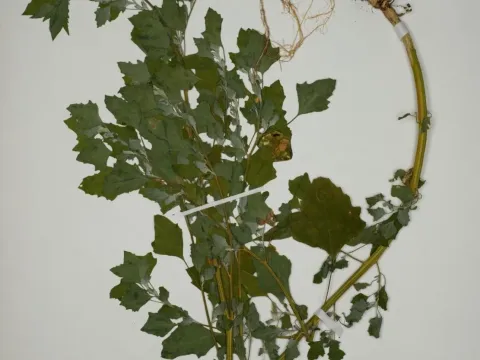
Guelder-leaved goosefoot
Chenopodium opulifolium
Guelder-leaved goosefoot is an annual plant that begins its life cycle through seed germination in early to mid-spring.
What the section contains
Guelder-leaved goosefoot
The optimal germination temperature range starts at 6-10 degrees Celsius, allowing the plant to emerge alongside early spring crops.
Its seeds possess high longevity, remaining viable in the soil seed bank for several years under varying environmental conditions.
Germination is typically triggered by soil moisture and the exposure to light, especially in tilled field conditions.
The plant demonstrates a rapid establishment phase, allowing it to dominate available space before competitive crops can canopy over.
Belonging to the Amaranthaceae family, this species is highly adapted to disturbed soils and anthropogenic landscapes.
It thrives in nitrogen-rich environments, making it a common sight in heavily fertilized agricultural fields.
The plant prefers full sunlight exposure and is capable of enduring dry conditions due to its efficient water-use strategy.
Soil texture preferences range from sandy to heavy loams, as long as there is adequate aeration for root development.
The plant adapts well to a variety of pH levels, though it shows a preference for neutral to slightly alkaline soils.
This species serves as an alternative host for numerous agricultural pests, including various aphids that damage row crops.
It is susceptible to common fungal pathogens like powdery mildew, which can spread to adjacent high-value vegetation.
The presence of the plant within a field creates a microclimate that can promote the development of secondary infections.
Virus transmission is a significant threat, as the plant acts as a reservoir for mosaic viruses during the growing season.
- Susceptibility to downy mildew
- Host for beet leafhopper populations
- Competitive pressure on main crops
- Potential for rapid infestation in vacant areas