
Hairy sea-blite
Bassia hirsuta
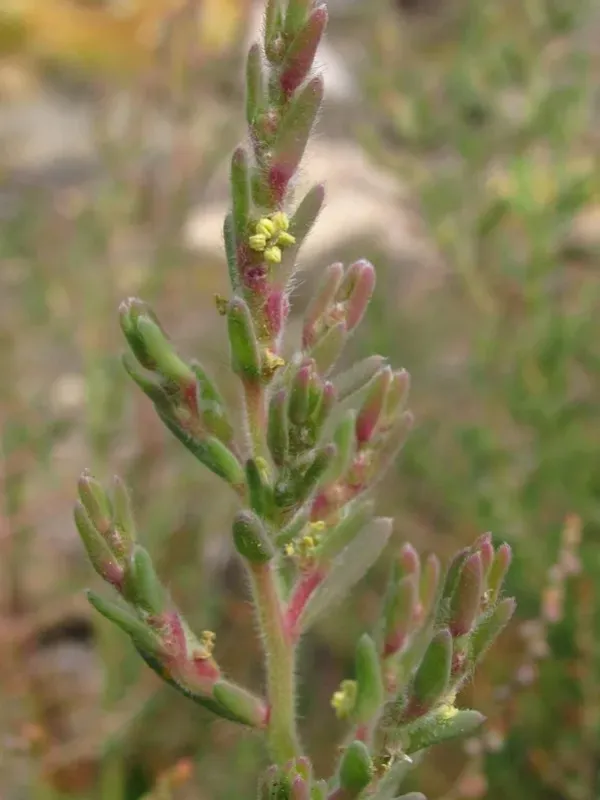
Description
Sowing dates
Hairy sea-blite (Bassia hirsuta) is an annual halophytic species that requires specific timing for sowing, primarily dictated by soil temperatures. The optimal window occurs in mid-spring once the risk of severe ground frost has subsided.
The seeds are small and possess high viability, yet they require precise placement. Sowing is typically performed at a shallow depth to ensure they maintain sufficient contact with moisture while receiving enough light for germination.
In field conditions, spacing is crucial for canopy management. For biomass production, higher planting densities are preferred, whereas lower densities are recommended when the objective is to maximize seed production.
As a plant native to saline environments, it naturally germinates when early spring precipitation reduces the salinity of the surface soil layer. Farmers can mimic this process through controlled irrigation to improve emergence rates.
Crop rotation planning should account for the plant's natural tendency for self-seeding. Managing the seed bank in the soil is vital to prevent unintended infestation of subsequent commercial crops in the field.
Growing requirements
Bassia hirsuta is classified as a true halophyte, characterized by its remarkable tolerance to high concentrations of sodium and other salts in the soil. It thrives in saline coastal areas where conventional agricultural crops struggle to survive.
Climatically, the species is highly adaptable, exhibiting significant drought tolerance. It is well-suited to regions with low rainfall and extreme temperature fluctuations, provided there is adequate sun exposure.
The plant prefers sandy or loamy-sandy soil types, often found in maritime dunes or around salt-affected basins. Good drainage is essential, as the species is highly sensitive to waterlogged conditions that can cause root decay.
Sunlight is the primary growth driver for this species. It is an obligate heliophyte, meaning that even partial shading by weeds or neighboring plants will significantly inhibit its vegetative growth and biomass yield.
While Bassia hirsuta can grow in nutrient-poor soils, phosphorus supplementation can occasionally boost root architecture in highly degraded sites, facilitating better water and nutrient uptake in saline substrates.
Yield
The yield of Hairy sea-blite is heavily dependent on the salinity levels and soil moisture content during the vegetative phase. In managed stands, it can produce a substantial amount of biomass suitable for fodder or soil improvement.
Typical yields vary significantly based on environmental stressors. Under favorable salinity and moisture conditions, the plant can generate an impressive volume of green matter, making it a viable option for utilizing marginal lands.
Forage value is a key aspect of its хозяйственное use. However, due to its halophytic nature, it contains high mineral content; therefore, it is often utilized as a supplemental component in livestock feeding rather than a sole source.
Seed yield is another performance metric. As an annual, the plant invests heavily in reproductive output towards the end of the season, which can be harvested for future plantings or processed for specific agro-industrial applications.
Beyond direct economic yield, the crop serves an ecological role. By accumulating salts, it contributes to the biological reclamation of saline soils, potentially preparing them for more sensitive plant species over several seasons.
Main diseases and pests
Hairy sea-blite is naturally robust against many common agricultural pests and diseases. Its unique physiological composition, including the salt-accumulating cells, provides an inherent barrier against traditional pathogens.
Potential threats include specialized phytophagous insects that have evolved to feed on members of the Chenopodiaceae family. These may target the inflorescences or seeds, potentially impacting the reproduction cycle.
Fungal diseases like root rot or powdery mildew are rarely observed in these plants due to the hostile osmotic environment they create for fungal hyphae. This minimizes the need for chemical disease management.
The greatest threat during the early development stage is interspecific competition. Weeds that grow faster can outcompete young Hairy sea-blite seedlings, leading to reduced stand density and overall biomass productivity.
Environmental disasters, such as severe flooding, pose the most significant risk. While the plant is drought-tolerant, prolonged water inundation creates an anaerobic environment that the species cannot withstand.
Harvesting
Harvesting for biomass should occur at the onset of flowering. This stage ensures the best nutritional quality for fodder, as the plant is still succulent and its fibers have not yet become lignified.
For seed harvesting, timing is critical. It must be performed when the seeds reach full biological maturity but before natural shedding begins, which usually requires specialized harvesting machinery.
Mechanical harvesting is generally feasible using standard equipment. However, care must be taken to adjust the settings to accommodate the plant's morphology and prevent the wastage of fine seeds during the threshing process.
Post-harvest handling requires efficient drying to prevent microbial spoilage, although the high salt concentration in the plant tissue naturally aids in extending its storage shelf life compared to conventional hay.
Proper cleaning and moisture control during storage are essential to maintain germination energy for the following season. Storage facilities must be dry, well-ventilated, and free from pests to ensure the longevity of the harvest.