
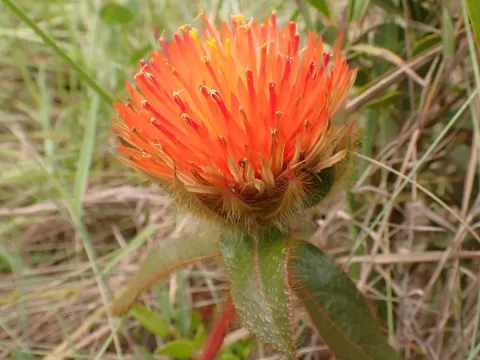
Gomphrena officinalis
Gomphrena officinalis
Gomphrena officinalis is a perennial herbaceous plant belonging to the Amaranthaceae family, originating from the Cerrado regions of South America. Due to its tropical origin, in non-tropical zones, it is typically managed as an annual crop to maximize yield before the arrival of cold weather.
What the section contains
Gomphrena officinalis
Propagation is generally performed via seeds. Sowing should take place in protected environments such as greenhouses or hotbeds during late winter or early spring, typically February to March, to ensure a robust start before the growing season.
The seeds require a warm substrate, around 20-25 degrees Celsius, to achieve uniform germination. Proper spacing during the seedling phase is essential to prevent etiolation and ensure the development of a healthy root system prior to transplantation.
Hardening off the seedlings is a critical step before transferring them to open field conditions. This acclimatization process allows the young plants to adjust to outdoor light levels and temperature fluctuations, reducing post-transplant stress.
Field sowing is conducted once the risk of frost has completely passed and the soil has warmed up to at least 15-18 degrees Celsius. Careful attention to soil moisture during the germination phase is necessary for success.
This crop thrives in full sun exposure. Adequate solar radiation is vital for the biosynthesis of the bioactive saponins for which the plant is highly valued in pharmacological applications.
Soil requirements include well-drained, light-textured earth. Gomphrena is sensitive to waterlogged conditions, which promote root rot and hinder nutrient uptake, particularly in heavy or clay-based soils.
While the plant shows moderate drought tolerance once established, consistent irrigation is necessary for commercial production to maximize biomass. Water should be applied at the base of the plant to keep the foliage dry.
The optimal pH range for growth is between 6.0 and 7.0. Regular soil testing is recommended to ensure that nutrient availability, particularly for micronutrients, remains within the range favorable for optimal plant metabolism.
Nutrient management focuses on balanced NPK applications during the vegetative phase, followed by phosphorus-rich fertilization during the floral initiation stage to promote flower density and active ingredient concentration.
The economic value of Gomphrena officinalis lies in its aerial parts, particularly the inflorescences and leaves, which are rich in diverse chemical compounds including essential oils and medicinal saponins.
Peak biomass and quality are achieved by harvesting at the time of full bloom. Delaying the harvest leads to the degradation of metabolites as the plant begins its senescence phase, while early harvesting yields lower overall dry mass.
Yield varies significantly based on planting density and soil fertility. In well-managed agricultural systems, growers can expect substantial harvests that require efficient drying processes to maintain pharmacological integrity.
Post-harvest processing involves immediate drying in controlled, low-temperature environments (below 40 degrees Celsius). This method preserves the chemical profile of the plant, preventing the loss of volatile oils and active substances.
The storage life of the dried product is significantly extended when kept in airtight, moisture-proof containers in a cool, dark environment. Proper storage ensures that the medicinal value remains consistent for up to two years.
Disease management is centered on preventing fungal infections such as powdery mildew, which thrive in high-humidity microclimates. Increasing plant spacing and improving air circulation are the most effective preventive measures.
Root rot, often caused by Pythium or Phytophthora species, is a common threat in poorly drained fields. Strict adherence to irrigation schedules and avoiding over-watering are essential to mitigate this risk.
Aphids and spider mites are the most frequent insect pests. These pests feed on the succulent parts of the plant, causing damage that not only reduces yield but can also facilitate the transmission of viral pathogens.
Integrated Pest Management (IPM) strategies, including the use of neem-based oils or biological control agents, are preferred over synthetic pesticides to ensure the final product meets safety standards for medicinal use.
Regular monitoring of the plantation is vital for the early detection of stress factors. Removing and disposing of infected plant material prevents the spread of diseases within the crop cycle.
The harvesting process requires careful timing to ensure the highest quality of raw material. It is usually performed manually using sharp, sterile shears to prevent crushing of the stems and to ensure clean cuts.
The optimal time for harvesting is mid-morning, after the dew has evaporated but before the heat of the day reaches its peak, which helps in reducing post-harvest respiratory loss.
Plants are cut at the base of the inflorescence and the upper portion of the foliage. Immediately after collection, the raw material should be moved to a staging area for cleaning and primary sorting.
Sorting involves the removal of any damaged leaves, weeds, or soil contaminants that could lower the quality of the pharmaceutical extract. Consistency in the sorting process is key to high-grade production.
Finally, the drying process should be gradual and uniform. Utilizing perforated trays allows for maximum air contact with the plant material, ensuring efficient moisture removal and a final product that is free from mold and decay.