
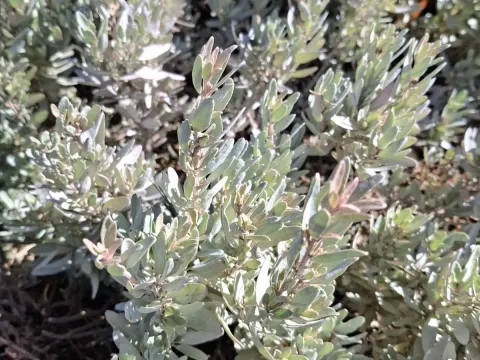
Grey saltbush
Atriplex cinerea
Grey saltbush seeds are primarily sown in the spring period when the soil warms up to a temperature of 12–15 degrees Celsius.
What the section contains
Grey saltbush
The optimal planting depth is 1–2 centimeters, as small seeds require close contact with a moist substrate.
When using the crop for the restoration of saline lands, winter sowing is possible in regions with a mild climate for early germination in the spring.
The seeding rate should be adjusted taking into account the high field germination of the seeds, typically using 5–8 kg per hectare for row seeding.
An important factor in sowing is ensuring the plot is free from perennial weeds that can suppress saltbush seedlings during the first month of development.
The grey saltbush is a typical halophyte belonging to the Amaranthaceae family, ideally adapted to growing on saline and alkaline soils.
The plant shows exceptional tolerance to high concentrations of sodium and magnesium in the soil adsorption complex, making it valuable for reclaiming degraded lands.
The crop requires open sunny areas, as shading leads to a sharp decrease in biomass and a slowdown of the photosynthesis process.
Water requirements are moderate; the plant is capable of surviving long periods of soil and atmospheric drought due to the presence of special structures on its leaves.
For active biomass accumulation, a basic level of nitrogen compounds in the soil is necessary, although the plant adapts effectively to poor sandy soils as well.
The biomass yield of the grey saltbush strongly depends on the level of soil salinity and the frequency of rainfall during the active growth period.
Under irrigation or favorable moisture conditions, the crop is capable of producing two full cuttings per growing season.
The nutritional value of the biomass is characterized by a high content of mineral substances, although energy density can vary depending on the growth stage.
Maximum productivity indicators are achieved when harvesting immediately before the onset of the active flowering phase of the plants.
Using saltbush as pasture forage allows for high grazing density provided that the load on the phytocenosis is strictly controlled.
The main threats to grey saltbush crops are fungal diseases that develop in high air humidity, such as powdery mildew.
Pest insects, including certain species of weevils and leaf beetles, can damage the leaf apparatus, which reduces the overall photosynthetic capacity.
Root rot poses a danger during water stagnation on heavy clay soils, which is unacceptable for this species.
Competition from aggressive halophytic weeds may require mechanical weeding during the early vegetative period.
The risk of pest infestation is minimal due to the high salt content in the plant tissues, which acts as a natural defense mechanism against most phytophages.
Green mass harvesting is carried out mechanically using forage harvesters for silage or haylage production.
When preparing hay, it is important to control the drying speed to avoid excessive loss of leaves, which contain the primary nutritional elements.
Seed material is collected after the fruits have fully ripened and taken on their characteristic grey or brownish hue.
It is important to harvest seeds in dry weather to prevent the gathered mass from molding during storage.
Post-harvest residues of roots and stems are recommended to be tilled into the soil to improve its physical properties and enrich it with organic matter.