
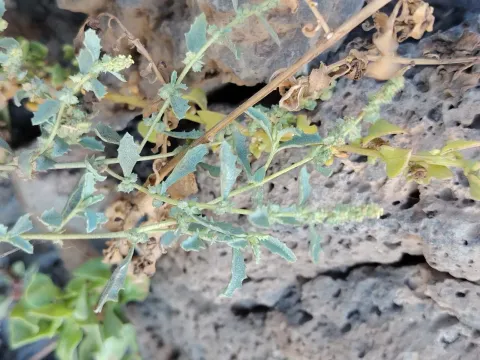
Sprawling saltbush
Atriplex suberecta
Sprawling saltbush is known for its high seed vitality, allowing it to remain viable in the soil for extended periods. Germination typically begins when soil temperatures reach 10–12 degrees Celsius in the spring.
What the section contains
Sprawling saltbush
For cultivation purposes, seeds should be sown at a shallow depth of approximately 1–2 centimeters, ensuring optimal contact with the soil profile to facilitate moisture absorption for sprouting.
The plant exhibits rapid initial growth, which is a critical feature for its establishment in diverse environments. Proper spacing between rows is essential to prevent overcrowding and to allow each plant to reach its full size.
Natural reproduction relies heavily on self-seeding, with the plant producing vast quantities of seeds over an extended flowering period, ensuring its persistence in the area.
Farmers and researchers prioritize timing the sowing period to coincide with adequate surface moisture, which drastically improves the emergence rates and subsequent canopy closure.
Atriplex suberecta is a member of the Amaranthaceae family, highly valued for its ability to thrive in degraded and saline soils where other vegetation often fails to establish.
The plant is highly heliophilic, meaning it requires full solar exposure to maximize photosynthesis and biomass production. Shaded areas lead to stunted growth and reduced vigor.
Drought tolerance is a primary characteristic of this species. Its deep-reaching root system allows it to extract moisture from deeper soil layers even during prolonged dry spells.
Soil adaptability is broad; however, it flourishes best in alkaline or neutral substrates. While it does not require excessive fertilization, moderate nitrogen availability can enhance its leaf development.
In terms of climate, the plant prefers warm conditions but demonstrates significant resistance to temperature fluctuations, making it a robust choice for arid and semi-arid agricultural regions.
Under humid conditions, the plant may occasionally suffer from powdery mildew, which appears as a white, dusty layer on leaves, potentially reducing photosynthetic capacity.
Insect pests such as aphids and various weevils are the most common threats to the plant. They tend to target the young, succulent growing points of the stems.
Despite these threats, the plant generally exhibits high compensatory growth, meaning it can often recover from minor pest damage without the need for intensive chemical intervention.
Good agricultural practices, such as maintaining adequate space and managing soil structure, are usually sufficient to mitigate the impact of most common plant diseases.
Integrated pest management strategies focusing on cultural practices remain the preferred approach for controlling damage to this hardy and versatile plant species.