
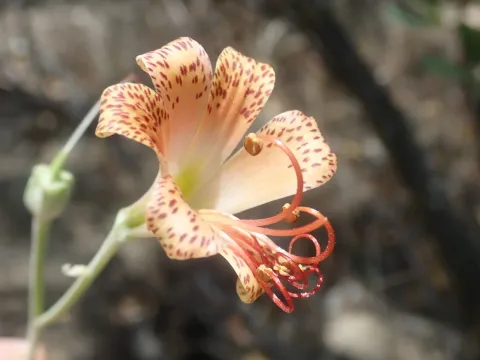
Alstroemeria versicolor
Alstroemeria versicolor
Sowing seeds of Alstroemeria versicolor is primarily carried out in late winter or early spring, using the seedling method to ensure better control over germination. The seeds require preliminary stratification at lower temperatures for about a month, which significantly increases their germination rate and vigor.
What the section contains
Alstroemeria versicolor
In commercial operations, vegetative propagation by rhizome division is more commonly practiced, allowing the preservation of the mother plant's varietal characteristics. The optimal time for division is during the dormant period, immediately after the active flowering phase ends.
Planting in open ground or greenhouses should only occur once stable, warm weather is established and the soil has warmed up to at least 12-15 degrees Celsius. It is crucial to avoid deep planting of rhizomes to prevent rotting in high-moisture conditions.
When planting in the field, a spacing of at least 40-50 centimeters between plants is necessary to ensure adequate air circulation within the bush. Planting density directly affects stem light exposure and the overall health of the crop throughout the growing season.
To create optimal development conditions in greenhouses, substrates mixed with peat and perlite are used to ensure porosity and good water permeability. Regular transplanting of young plants into larger containers stimulates the development of a robust root system.
Alstroemeria versicolor belongs to the Alstroemeriaceae family and is a tuberous perennial that requires specific conditions for prolific flowering. Naturally occurring in the mountainous regions of Chile, it prefers areas with excellent drainage and a moderately cool climate.
The crop has high requirements regarding light quality, preferring diffused light in the morning and light shade during midday hours. Direct sunlight can lead to soil overheating and the suppression of the root system.
The soil mix should be slightly acidic, rich in organic matter, and possess excellent water-draining capacity to prevent moisture stagnation. Acidification or soil compaction often leads to the death of root tubers.
The temperature regime during active growth should be maintained at 18-22 degrees Celsius, with a slight drop to 14-16 degrees at night. Rapid temperature fluctuations may trigger bud drop.
Regular irrigation is a crucial aspect, as it is essential to maintain constant substrate moisture without allowing it to dry out or become waterlogged. Drip irrigation systems are highly recommended for precision control.
The yield of Alstroemeria is measured by the number of marketable flower stems harvested from each plant per production season. With proper agricultural practices, a single plant can produce between 10 and 20 quality stems per year.
Flowering intensity directly depends on the quality of fertilization, which should be conducted during the bud formation phase using complex mineral fertilizers with high potassium content. Insufficient nutrition leads to thin stems and reduced decorative quality.
The commercial use of the crop is focused on cut flowers, valued by florists for their long vase life and color diversity. Properly harvested stems maintain freshness for up to two weeks if the water is changed regularly.
To increase marketable output, bush-shaping techniques are applied by removing weak and damaged stems, which directs nutrients toward the development of strong reproductive organs. Regular pruning also contributes to better light penetration into the center of the plant.
Commercial profitability is achieved by creating a stable greenhouse microclimate, allowing for year-round production regardless of external weather conditions. Harvesting should be performed when the buds are partially opened.
The main threats to Alstroemeria are fungal diseases, such as gray mold and root rot, occurring due to improper humidity and poor ventilation. Systemic fungicides are used to combat these infections effectively.
Among pests, spider mites and thrips cause the most damage, as they reproduce rapidly in the warm, dry atmosphere of greenhouses. Affected leaves deform and lose turgor, which significantly lowers the quality of the flowers.
Aphids can also attack young shoots and buds, sucking sap and transmitting viral diseases that are virtually incurable. Regular plant inspections allow for the timely detection and localization of pest outbreaks.
Slugs and snails can harm young plants in open ground, necessitating the installation of protective barriers or the use of specialized baits. It is important to maintain cleanliness around planting sites by removing weeds.
- Regular disinfection of tools before and after work.
- Timely removal and disposal of infected plant parts.
- Adherence to quarantine measures when importing new planting material.
Harvesting (cutting) is conducted early in the morning when plants are fully hydrated, which ensures better stem turgor and a longer vase life. Stems are carefully pulled or cut at the base, avoiding damage to the root crown.
After harvesting, flowers are immediately placed in clean water with added preservatives to prevent bacterial growth. The storage temperature should be maintained at 2-5 degrees Celsius to slow down metabolic processes.
Product sorting is based on stem length, bud size, and the absence of mechanical damage to the foliage. Rejected items must be disposed of immediately to prevent the spread of disease.
Transportation requires special protective packaging to prevent the snapping of delicate stems and moisture loss during transit. Packaging must provide sufficient ventilation to prevent condensation buildup.
The end consumer receives a product ready for retail through trade networks, provided all the post-harvest stages mentioned above are meticulously followed. A well-organized harvest cycle is the key to competitiveness in the flower market.