
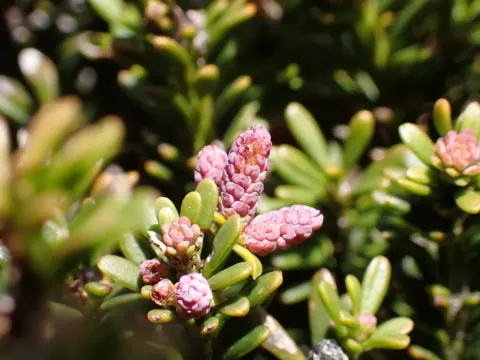
Alpine podocarp
Podocarpus alpinus
The Alpine podocarp (Podocarpus alpinus) is a member of the Podocarpaceae family. It is a slow-growing, evergreen conifer native to the mountain ranges of Australia and Tasmania, where it is well-adapted to high-altitude, cool, and moist environmental conditions.
What the section contains
Alpine podocarp
This species requires well-drained soil to thrive, as it is highly sensitive to waterlogged conditions that can cause root decay. A slightly acidic to neutral soil pH is considered optimal for its nutrient uptake and overall development in both garden and container settings.
In terms of climate, the plant prefers cool temperatures and high atmospheric humidity. While it is hardy, it benefits from partial shade in regions with intense summer heat. Providing adequate airflow is crucial to prevent fungal infections and ensure the plant maintains its vibrant green foliage.
The agrotechnical management of Podocarpus alpinus involves regular light pruning to maintain its compact, often prostrate growth habit. It responds well to training, making it a favorite choice for rock gardens, low hedges, and even miniature bonsai displays.
Host-plant utility is primarily decorative. Due to its unique texture and resistance to harsh weather, it is widely used in landscape architecture as a ground cover or a structured evergreen shrub that adds year-round visual interest to temperate gardens.
The main threats to the Alpine podocarp are soil-borne pathogens, specifically phytophthora root rot, which occurs in poorly drained soils. Maintaining proper site drainage is the most effective cultural practice to prevent such issues.
Pest issues include scale insects and spider mites, which typically target the plant in sheltered or stagnant conditions. Maintaining good plant hygiene and ensuring high humidity levels during dry spells are effective ways to mitigate the risk of pest infestations.